
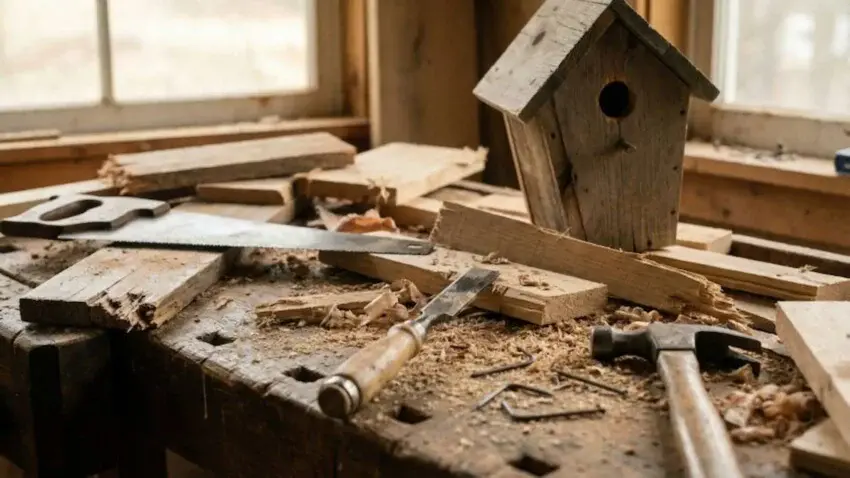
Common woodworking mistakes beginners make usually come down to skipping the basics.
Many new woodworkers struggle not because they lack skill, but because they rush preparation,
choose the wrong wood or overlook simple safety and measurement steps.
By slowing down, preparing materials properly, and focusing on fundamentals early,
beginners can avoid frustration, waste less material, and build stronger,
better-looking projects from the start.

🔨 Beginner Tools That Help Prevent Common Woodworking Mistakes
Many woodworking mistakes beginners make come down to using the wrong tools —
or not having the right ones available when they matter most.
These beginner-friendly tools help improve accuracy, safety, and consistency without
overcomplicating your workshop.
GRENPRO Combination Square & Carpenter Square Set
Accurate measuring and layout are the foundation of clean cuts and tight-fitting projects.
This GRENPRO combination and carpenter square set gives beginners an easy, reliable way
to check angles, mark lines, and keep assemblies square from start to finish.
 Amazon Product Suggestion:
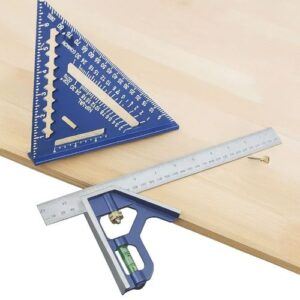
 GRENPRO Combination Square & Carpenter Square Set
(7″ & 12″)
This GRENPRO square set is a beginner-friendly option for accurate measuring and layout work in the shop. The 7-inch carpenter square and 12-inch combination square cover common tasks like marking cuts, checking angles, and verifying squareness, all in a lightweight, easy-to-use design.
Why It’s Great:
✔ Includes both a carpenter square and combination square
✔ Lightweight aluminum body with stainless steel ruler
✔ Built-in bubble level for quick alignment checks
✔ Great value for beginner and DIY woodworking setups
STANLEY FATMAX 25-Foot Tape Measure
Accurate measurements are the foundation of every successful woodworking project.
The STANLEY FATMAX 25-foot tape measure delivers durability, easy-to-read markings,
and reliable standout for measuring long boards with confidence.
Amazon Product Suggestion:
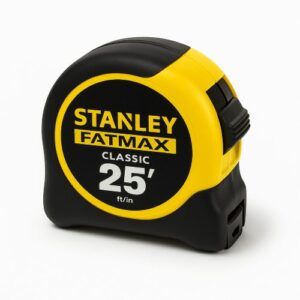
STANLEY FATMAX 25-Foot Tape Measure
A tough, reliable tape measure built for real job-site use. The STANLEY FATMAX 25′ delivers crisp easy-read markings, a strong standout, and the perfect length for woodworking and outdoor projects.
Why it’s great:
✔ Heavy-duty construction built to last on the jobsite or in the shop
✔ Easy-to-read markings for fast, accurate measurements
✔ 25-foot length handles most indoor and outdoor projects
✔ Smooth standout lets you measure long boards without help
IRWIN QUICK-GRIP 6” One-Handed Mini Bar Clamp Set
Quick, controlled clamping makes glue-ups and small assemblies far less frustrating.
The IRWIN QUICK-GRIP 6″ one-handed mini bar clamps deliver reliable holding power
in tight spaces while keeping your other hand free to position parts accurately.
Amazon Product Suggestion:
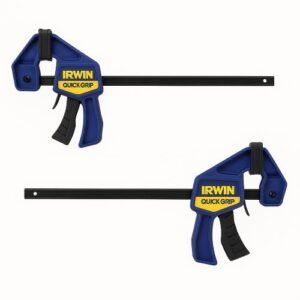
IRWIN QUICK-GRIP 6” One-Handed Mini Bar Clamp Set
(4-Pack)
These IRWIN Quick-Grip clamps are my go-to shop workhorses. Light, fast, and truly one-handed, they’re perfect for small builds like display cases, shelves, frames, and trim. Even with their compact size, they deliver solid pressure, lock cleanly, release smooth, and won’t dent your walnut thanks to the non-marring pads. If you want clamps you’ll actually enjoy using — these are the ones.
Why it’s great:
✔ One-handed operation for fast, effortless clamping
✔ Strong, consistent grip with soft non-marring pads
✔ Lightweight design ideal for tight spaces and multiple clamps
✔ Reliable performance with no slipping or flex
NoCry Clear Safety Glasses
Protecting your eyes is non-negotiable when cutting, sanding, or routing in the shop.
These NoCry clear safety glasses provide comfortable, fog-free protection with full side
coverage so you can focus on the cut — not your eyewear.
Amazon Product Suggestion:

NoCry Clear Safety Glasses
(Black & Red)
These NoCry clear safety glasses deliver reliable, all-day eye protection for cutting, sanding, and routing tasks. Lightweight, comfortable, and crystal clear, they stay fog-free while shielding your eyes from dust, chips, and side impact.
Why It’s Great:
✔ ANSI Z87 certified for real shop-level protection
✔ Anti-fog, scratch-resistant lenses stay clear while you work
✔ Adjustable temples with wrap-around side coverage
✔ Lightweight design comfortable enough for all-day wear
With the right measuring and safety tools in place, you’re set up for cleaner cuts and fewer mistakes. Now let’s walk through how to use them properly so every measurement — and every cut —
comes out right.
📏 Precision in Measurement: A Key to Success
Measurement is one of the fastest ways a woodworking project can go wrong.
Even small inaccuracies add up, which is why the old saying “measure twice, cut once” still holds true —
or you’ll be measuring once and cussing twice.
Double-check your measurements and use light pencil lines so adjustments are easy to make before committing to a cut.
Consistency matters just as much as accuracy.
Switching between different tape measures, rulers, or squares can introduce
small variations that lead to poor fitment later.
Stick with one measuring tool throughout a project to keep everything aligned and predictable.
Cutting without a clear reference line is another common mistake.
Always mark your cuts clearly and use guides, fences, or straightedges when possible.
These steps help ensure straight, repeatable cuts and reduce the chance of errors.
Rushing through cuts often leads to sloppy results.
Taking time to set up properly and focus on accuracy produces cleaner cuts and safer working conditions. Before final assembly, test-fit your pieces to confirm everything lines up as intended.
Spending a few extra minutes here can prevent major frustrations later.
🛠️ Build with Confidence: Practicing Patience and Craftsmanship
Before the sawdust starts flying, take a moment to get clear on your plan.
Skipping this step is a common beginner mistake that leads to wasted material and
unnecessary do-overs.
Simple sketches, cut lists, or even a mental walkthrough of the steps help you see the project
as a whole before you start cutting pieces apart.
It’s easy to feel rushed to see a finished result, but woodworking rewards patience.
Each step builds on the one before it and rushing through the process often creates
problems that take longer to fix later.
Slowing down improves accuracy, safety, and overall results.
Early projects rarely turn out perfect — and that’s normal.
Minor gaps, uneven edges, or cosmetic flaws are part of learning the craft.
Skill develops through repetition, not perfection, and every project is an opportunity to improve.
Glue-ups are another stage where patience matters.
Rushing alignment or clamp time can weaken joints and throw assemblies out of square.
Give glue the time it needs to cure properly before moving on to the next step.
Sanding and finishing are often overlooked, but they play a major role in how a project looks and feels. Taking your time here helps eliminate rough spots, highlights clean joinery,
and produces a finish you can be proud of instead of one you wish you’d slowed down for.
🪵 Final Thoughts…
Woodworking isn’t about getting everything right on the first try.
Every project builds skill, confidence, and understanding —
even the ones that don’t turn out exactly as planned.
Mistakes are part of learning the craft, not signs that you’re doing something wrong.
Focusing on fundamentals like preparation, accurate measurement, patience,
and proper finishing will take you further than rushing toward perfection.
Skills improve with repetition, and frustration fades as experience grows.
Stick with the basics, keep practicing, and give yourself room to learn.
Over time, those early mistakes turn into lessons that make every project better than the last.
 More Woodworking Projects You’ll Enjoy
Here are a few other beginner-friendly project ideas you can try next:
-
How to Build a Wooden Mailbox – A sturdy outdoor project that teaches accurate layout and assembly.
-
Build a Simple Wooden Toolbox – A classic beginner project and a great way to organize your tools.
-
DIY Display Case – Learn clean joinery with a project that looks great in any room.
-
Craft a Kids’ Stool in 5 Steps – A quick build that teaches essential cutting and measuring skills.
These projects help you grow your skills while creating something you’ll enjoy for years to come.
You got this!
 Craft it. Shape it. Own it!
 Need More Plans?
 Click here to learn more about Ted’s Woodworking Plans.
If you want access to hundreds of additional woodworking projects and detailed tutorials, check out my full review of Ted’s Woodworking Plans.
It’s packed with step-by-step builds that are perfect for weekend projects.

 Turn Your Woodworking Passion Into Income
Click here to learn more about Wealthy Affiliate.
SawdustSmarty.com started as a small hobby —
and it only grew once I finally learned how to build a real website.
If you’ve ever thought about turning woodworking into a side income, the training at Wealthy Affiliate is what I personally recommend.
