
If you’re looking for DIY wood projects for beginners that are simple, fun, and actually build your confidence instead of overwhelming you, you’re in the right place.
This guide walks you through the first steps of woodworking the same way I teach new builders in my own shop —
clear instructions, basic tools, and projects you can finish in a weekend.
Whether you’ve never picked up a saw before or you’re just trying to sharpen your skills, this is the perfect place to start.
🔨 What Makes a Good Beginner Wood Project
When you’re just getting started, not every project is a good first pick.
Some look simple in photos but turn into a frustration-fest the second the sawdust starts flying.
A true beginner-friendly project has a few key traits that make it easier to learn without feeling overwhelmed.
A solid beginner project will usually:
-
Use straight cuts and simple shapes
-
Require only basic tools (nothing fancy or expensive)
-
Have forgiving joints that still look great even if you’re off by a hair
-
Teach you one or two new skills at a time
-
Come together in a single afternoon or weekend
If a build checks most of these boxes, congratulations —
you’ve found a perfect starter project that builds skills and confidence.
🧰 Beginner Woodworking Tools You Actually Need
One of the biggest reasons beginners get frustrated is simple —
they’re trying to build with the wrong tools, or not enough of them.
The good news?
You don’t need a full-blown shop to knock out your first few projects.
A small, reliable starter kit is all it takes to build birdhouses, tool caddies, shelves, and almost anything on this page.
Below are three essential tools I recommend for every beginner, because they make your cuts cleaner, your glue-ups easier, and your final project look like you actually know what you’re doing.
🔧 IRWIN QUICK-GRIP 6” One-Handed Mini Bar Clamp Set (4-Pack)
Clamps are one of those tools you reach for on almost every build.
These make holding pieces in place fast, easy, and frustration-free.
🌟 Amazon Product Suggestion:

✔️ IRWIN QUICK-GRIP
6” One-Handed Mini Bar Clamp Set
(4-Pack)
The IRWIN Quick-Grip clamps are
lightweight, strong, and truly one-handed.
They’re perfect for small builds where
speed, control, and clean pressure matter.
Why it’s great:
✔ One-handed operation for quick positioning
✔ Strong, consistent grip on small projects
✔ Non-marring pads protect your wood
✔ Lightweight and easy to use all day
🧴 Gorilla Wood Glue 8 oz Bottle
A good glue joint makes or breaks your build.
This is the kind you can trust every time you clamp it up.
🌟 Amazon Product Suggestion:
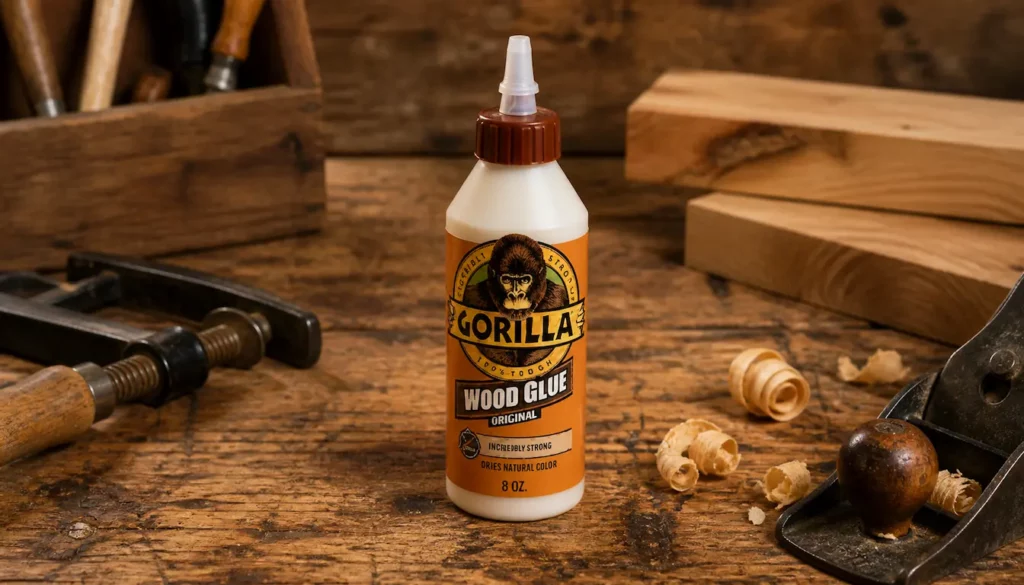
✔️ Gorilla Wood Glue
8 oz Bottle
(Natural Wood Color)
A good glue joint makes
or breaks your build.
This is the kind you can trust
every time you clamp it up.
Why it’s great:
✔ Strong, reliable bond that holds tight
✔ Dries to a natural wood color
✔ Fast set time for quicker builds
✔ Easy squeeze bottle for clean application
🪵 SKIL 5” Random Orbital Sander (with Cyclonic Dust Box)
Sanding is where your project really starts to come together.
A good sander makes the difference between rough and clean.
🌟 Amazon Product Suggestion:
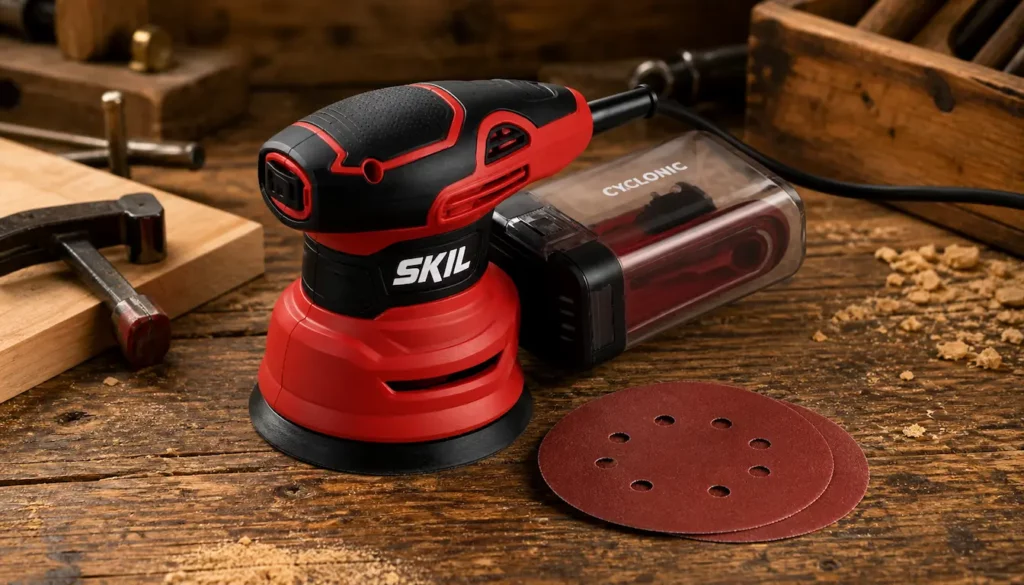
✔️ SKIL 5” Random
Orbital Sander
(with Cyclonic Dust Box)
This SKIL random orbital sander is
compact, powerful, and easy to control.
It smooths surfaces fast and
keeps dust under control while you work.
Why it’s great:
✔ Smooth, swirl-free random orbit finish
✔ Cyclonic dust box helps keep things clean
✔ Variable speed for better control
✔ Comfortable grip for longer use
⚠️ Safety & Smart Habits Before You Start
Before you dive into your first cut, take a minute to set yourself up for success.
Woodworking is fun, relaxing, and incredibly rewarding —
but only when you can actually see what you’re doing and keep all your fingers where they belong.
A few simple habits make a world of difference:
-
Wear safety glasses anytime you’re cutting or sanding
-
Keep your workspace clean and well-lit
-
Unplug power tools before changing blades or bits
-
Support long boards so they don’t pinch or kick back
-
Slow down — rushing a cut is how mistakes and injuries happen
👉👉 Pro Tip:
Keep a small box of scrap wood near your bench.
Anytime you’re uncertain about a cut or tool setting, practice on scrap first.
It saves your good lumber and your nerves.
🔨 5 Easy DIY Wood Projects for Beginners
Now it’s time to actually build something.
Each of the projects below teaches a core woodworking skill, uses basic tools, and can be finished in a single afternoon or weekend.
1. Simple Scrap-Wood Tool Caddy
A great first project because it uses small boards, straight cuts, and simple assembly.
Plus, you’ll use this thing every time you build something else.
What you’ll learn:
-
Measuring
-
Straight cuts
-
Basic glue-ups and clamping
2. Classic Backyard Birdhouse
A beginner staple.
Birdhouses come together quickly and give you plenty of room to customize the look.
What you’ll learn:
-
Drilling clean holes
-
Attaching a roof at the correct angle
-
Simple sanding and finishing
3. A Timeless Rustic Bench
This one looks impressive, but the build is extremely forgiving.
Great for porches, patios, and plant displays.
What you’ll learn:
-
Cutting legs to equal length
-
Simple joinery
-
Strengthening support braces
4. DIY Display Shelf or Case
A step up in precision, but still beginner friendly.
If you loved the tool caddy, this is your next move.
What you’ll learn:
-
Checking for square
-
Installing backs or shelves
-
Clean sanding for a pro finish
5. Fun Yard Spinner / Whirligig
A great “next step” project once you’re comfortable cutting curves and drilling for hardware.
What you’ll learn:
-
Using a jigsaw
-
Drilling straight through-holes
-
Basic hardware assembly
🧭 How to Approach Any Wood Project
(My Simple 5-Step Method)
No matter what you build —
a birdhouse, a tool caddy, or a full-on display case —
the overall process stays almost the same.
Once you get this flow down, every new project becomes easier.
1. Read the Plans (Twice)
Get familiar with the cut list, diagrams, and notes.
Visualize how the project goes together before you touch a board.
2. Measure & Mark Everything Clearly
Use a sharp pencil or marking knife, and make sure your square is actually square.
Clear layout lines = clean builds.
3. Make Your Cuts Slowly and Safely
Let the saw reach full speed before cutting.
Support long boards so they don’t bind.
Smooth, steady cuts beat fast ones every time.
4. Dry Fit the Entire Project
Assemble everything without glue or screws first.
(Dry Fit)
This is where you’ll find pieces that are slightly long or out of square —
way easier to fix now.
5. Glue, Clamp, Sand & Finish
Once the dry fit looks right, glue it up.
After the glue cures, sand everything smooth and add your favorite finish or paint.
👉👉 Pro Tip:
Keep a small notebook in the shop.
Write down what went well and what annoyed the hell out of you.
You’ll be shocked how fast your skills grow when you can see patterns in your wins and mistakes.
❌ Common Beginner Mistakes (And How to Avoid Them)
Everyone makes mistakes in the beginning
— it’s part of learning the craft.
The good news is that most of the “uh-oh” moments are totally avoidable once you know what to look out for.
Here are the big ones:
1. Cutting Too Fast
Rushing the cut makes the blade wander, burn the wood, or chip the edges.
Let the tool do the work.
2. Skipping the Dry Fit
Gluing first and checking later is how you end up with crooked boxes and gaps.
Dry fit everything before committing.
3. Ignoring Board Defects
Twist, bow, and big knots can ruin an otherwise simple project.
Always choose the straightest boards you can find.
4. Measuring Once, Cutting Twice
It’s funny until it happens to you.
Double-check your measurements
before every cut — especially the first one.
(Measure Once – Cuss Twice)
5. Getting Discouraged Too Quickly
Your first builds are supposed to have imperfections.
Even pros have a scrap pile…
they just don’t post those pictures online.
🔨 Final Thoughts…
Woodworking doesn’t start with a giant workshop or fancy tools —
it starts with one simple project, a few basic tools, and the guts to give it a try.
Every builder you look up to started right where you are now:
unsure, excited, and making plenty of “cuss twice” cuts along the way.
Pick one of the beginner projects on this page, grab your clamps and glue, and make some man glitter out of that first board.
Once you knock out that first build, the next one gets easier… and the next… and the next.
 More Builds You’ll Want to Try Next
Ready for the next project?
These builds will sharpen your skills and give you something solid to show for it:
-
How to Build a Wooden Mailbox
– A sturdy outdoor project that teaches clean layout and assembly -
Build a Simple Wooden Toolbox
– A must-have beginner build that keeps your tools organized -
DIY Display Case –
Practice clean joinery with a project that actually looks great -
Craft a Kids’ Stool in 5 Steps
– Quick, simple, and perfect for dialing in your basics
Every project builds skill —
the next one is where things start to click.
You got this!
 Craft it. Shape it. Own it!
This was such a motivating read! I really appreciate how you laid out beginner-friendly wood projects in a way that feels doable and not overwhelming. Sometimes woodworking can seem intimidating if you’re just getting started, but your step-by-step approach makes a big difference.
I’ve done a couple of small pallet projects and built a basic planter box last summer—it was a great way to learn how to measure and cut properly without needing expensive tools. That hands-on experience gave me a lot more confidence for future builds.
One question I had: do you have a go-to list of essential tools that beginners should invest in first? I’m still figuring out which ones are truly worth buying early on and which can wait.
In my opinion, woodworking is one of the most satisfying DIY hobbies—you get to build something useful and learn valuable skills along the way. Thanks for making it more accessible for those of us just starting out!
Thank you for your comment, Tommy Potter… I’m glad you can appreciate my post. Experience is the best teacher, no doubt. I do not have a go-to list of essential tools that beginners should invest in yet, but you just gave me a great idea for another article to post! Thanks!!
Approach it like this: You need something to measure with; You need something to cut with; You need something to sand with; and lastly, you need something to fasten with. That should be a good starting point.
Thanks again… Wayne
I really appreciate how this guide breaks down beginner wood projects into manageable steps, especially helpful for those of us who are new to DIY. One thing I’m curious about is how to choose the right type of wood for each project. For instance, should softwoods always be preferred for starters, or does it depend on the toolset available? Also, how critical is wood grain direction when assembling basic pieces like shelves or boxes? From my experience, a small error in measurement or cutting angle can really throw off a project, so I’d love to know if you recommend any beginner-friendly tools that help improve precision.
Thank you for your comment Slavisa… Choosing the right type of wood is crucial. For beginners, softwoods like pine or cedar are typically easier to work with, as they require less effort to cut and shape. The toolset you have might also influence your choice. For example, robust tools can handle hardwoods better, but for simplicity and ease, sticking with softwoods usually offers a more forgiving experience.
Grain direction isn’t just a minor detail—it can determine how strong and smooth your project turns out. Align the grain with the project’s dimensions, especially when crafting shelves or boxes, to enhance strength and avoid awkward warping or splitting. This little detail adds structural stability and maintains the aesthetic of your creation.
To start off on the right foot, beginner-friendly tools are your best friends. Look for things like a beginner-level jigsaw or a good-quality tape measure with easy-to-read increments. These tools can significantly boost your ability to create pieces with finesse. Don’t underestimate the impact of having the right equipment on your DIY journey.
Thanks again… Wayne