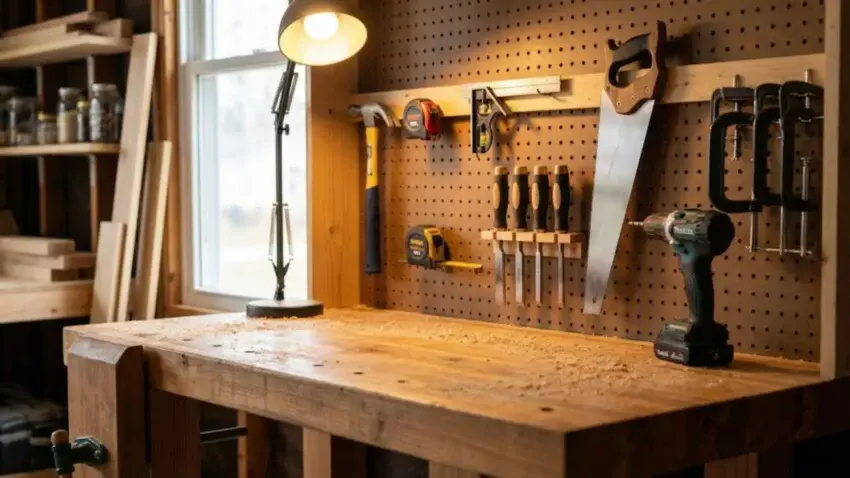
Woodworking tools for a beginner don’t need to be expensive, complicated, or overwhelming.
One of the biggest mistakes new woodworkers make is thinking they need a fully stocked shop before they can build anything worthwhile. The truth is much simpler: with a small, well-chosen set of tools—and a little patience—you can start building real projects right away.
This guide breaks down the essential woodworking tools beginners actually need, why each one matters, and which tools can wait until later. Whether you’re working out of a garage, a shed, or a corner of your basement, this page will help you build smarter, safer, and with confidence.
🔨 HOW TO THINK ABOUT TOOLS AS A BEGINNER
Before we talk about specific tools, it’s important to understand how beginners should approach tool buying.
- Tools support skills — they don’t replace them
- You don’t need “pro” tools to get professional results
- Every project teaches you which tool to buy next
If a tool doesn’t help you measure accurately, cut cleanly, or assemble safely, it probably isn’t essential yet.
👉👉 Once you’ve got a basic tool setup in place, this woodworking projects guide
will help you decide what to build first so you can start gaining real hands-on experience.
🧰 HAND TOOLS EVERY BEGINNER SHOULD START WITH
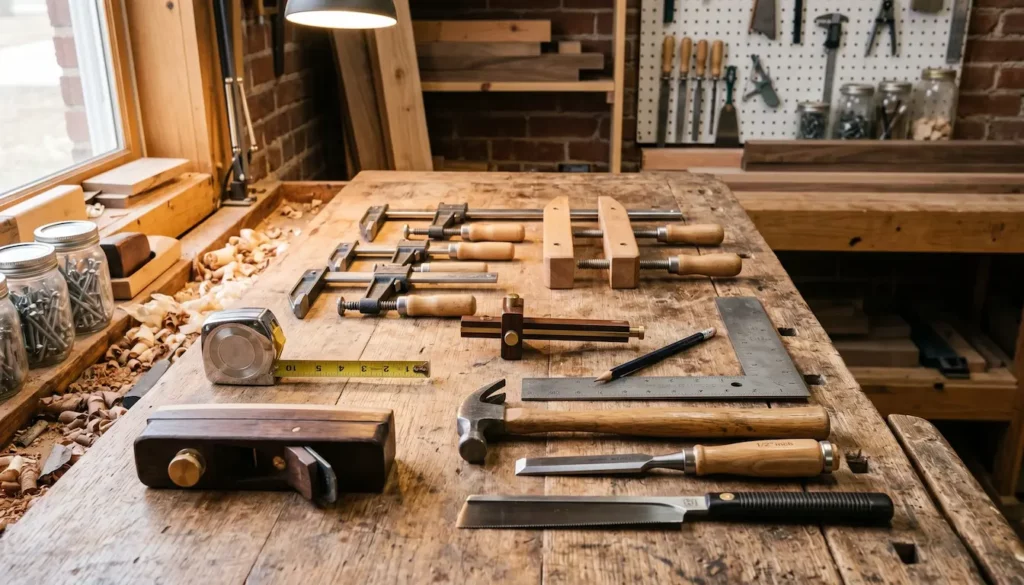
Hand tools teach control, accuracy, and technique—and they work quietly, cheaply, and safely.
Must-Have Hand Tools
- Hammer (general purpose)
- Screwdrivers (Phillips and flat)
- Chisels (basic set)
- Handsaw or backsaw
- Block plane (optional but powerful)
Why these matter:
Hand tools let you learn grain direction, pressure, and precision—skills that carry over to every power tool you’ll ever use.
⚡ BASIC POWER TOOLS FOR BEGINNERS
Power tools save time and effort, but beginners don’t need a full lineup.
Starter Power Tools
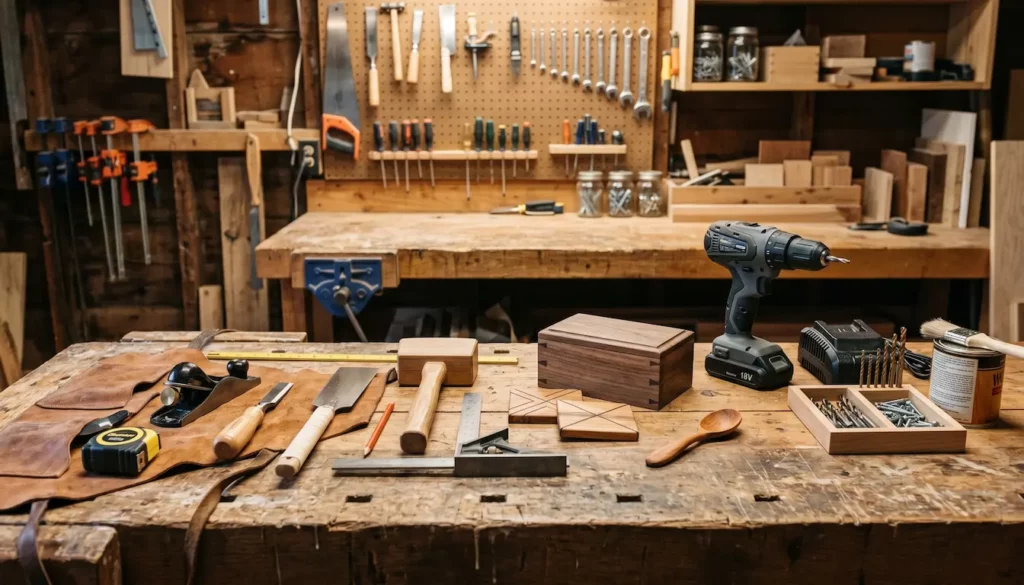
- Drill / driver (absolute essential)
- Circular saw
- Random orbit sander
- Jigsaw (optional, project-dependent)
Beginner tip:
Buy tools that can handle multiple jobs. Versatility beats specialization early on.
👉👉 If you’re deciding whether to start with power tools or stick with hand tools,
this breakdown of power tools vs hand tools explains the pros and cons of each
so you can choose what fits your skill level and workspace.
📏 MEASURING & MARKING TOOLS (WHERE GOOD WORK BEGINS)
Bad measurements ruin more projects than bad cuts.
Essential Measuring Tools
- Tape measure
- Combination square
- Speed square
- Pencil (yes, really)
If it isn’t square or properly marked, no amount of sanding will save it.
👉👉 Accurate cuts start with accurate layout,
which is why understanding proper measuring and marking techniques
makes every beginner project easier and cleaner.
📏 The Right Tools Make Learning Easier
🗜️ CLAMPS & WORKHOLDING (THE UNSUNG HEROES)
Most beginners don’t buy enough clamps—until they need them.
Starter Clamp Types
- Bar clamps
- Spring clamps
- Quick-grip clamps
Clamps don’t just hold pieces together—they improve accuracy, safety, and glue strength.
🦺 SAFETY GEAR YOU SHOULD NEVER SKIP
Woodworking is rewarding, but it demands respect.
Basic Safety Gear
- Safety glasses
- Hearing protection
- Dust mask or respirator
- Push sticks / blocks
Rule:
If you protect your eyes, lungs, and fingers, you’ll be able to build for decades.
👉👉 Before using any power tools, take a few minutes to review basic
woodworking safety practices to protect your eyes, lungs, and hands as you learn.
🚫 TOOLS YOU DO NOT NEED (YET)
This is where beginners save money.
You can safely wait on:
- Table saw
- Thickness planer
- Jointer
- Router table
- Specialty jigs
These tools are fantastic—but they make sense after you understand workflow and project needs.
🪚 BUILD PROJECTS FIRST — THEN UPGRADE TOOLS
Instead of asking “What tool should I buy next?”
Ask: “What project do I want to build next?”
Projects reveal:
- Tool gaps
- Skill gaps
- Upgrade timing
That’s why your next stop should be a clear, beginner-friendly project path.
👉👉 Before following these woodworking tool plans for beginners,
it helps to understand the basics by starting with woodworking tools for a beginner,
so you know exactly what tools you should have before building.
🧭 WHERE TO GO NEXT (Internal Links Section)
Now that you understand the tools, the next step is putting them to work:
- 👉 Woodworking Projects Guide – beginner-friendly builds that match your toolset
- 👉 Best-Selling Wood Projects – when you’re ready to build with profit in mind
- 👉 Tool-specific deep dives (to be linked later)
🪚 Start Simple And Keep Building
🏁 Final Thoughts…
Woodworking doesn’t start with a credit card—it starts with curiosity and commitment.
A small set of reliable tools, used well, will take you further than a shop full of gear you don’t understand yet.
Start simple. Build often. Upgrade with purpose.
That’s how real woodworkers are made.
 Projects For Your New Tools
Ready for the next project?
These builds will sharpen your skills and give you something solid to show for it:
-
How to Build a Wooden Mailbox
– A sturdy outdoor project that teaches clean layout and assembly -
Build a Simple Wooden Toolbox
– A must-have beginner build that keeps your tools organized -
DIY Display Case –
Practice clean joinery with a project that actually looks great -
Craft a Kids’ Stool in 5 Steps
– Quick, simple, and perfect for dialing in your basics
Every project builds skill — the next one is where things start to click.
You got this!
 Craft it. Shape it. Own it!