
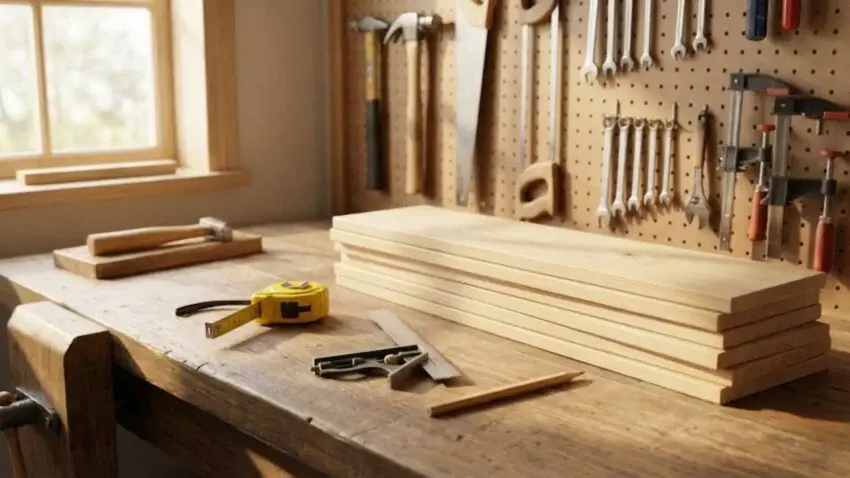
Learning how to measure and mark wood accurately is the backbone of successful woodworking.
This step sets the foundation for every project, from simple builds to more advanced joinery.
When each piece fits just right, it’s not luck — it’s the result of careful preparation and attention to detail.
Accurate measuring and marking help ensure clean cuts, tight joints, and smooth assembly.
Starting with the right approach saves time, reduces frustration,
and prevents wasted material before tools ever touch the wood.
If you’re just getting started, it helps to understand the core skills behind accurate layout work.
Our guide on Basic Woodworking Skills Every Beginner Should Learn covers the fundamentals
that make measuring and marking easier to master.
Measuring and Marking Tools for Beginners
For a beginner woodworker, the right tools make all the difference.
Start with a reliable tape measure.
It’s your buddy for quick and accurate dimensions.
Learning to read it correctly is step one in avoiding miscalculations.
Next, get yourself a square, like a combination square or a speed square.
Why squares?
They ensure your edges and corners come out neatly aligned.
It’s a quick way to check that your lines are on point,
which leads to cleaner joints and fewer headaches during assembly.
You’ll also want to choose between a pencil and a marking knife for different tasks.
A pencil’s great for general marking — just make sure it’s sharp to get clear lines.
For tasks needing that extra bit of precision, like laying out joinery, a marking knife can define sharp,
floss-thin lines that a saw can easily follow.
Importantly, before making any marks, consider familiarizing yourself with the grain
and character of the wood.
Different woods take pencil marks differently and understanding this can save you time.
No one wants to make a mess of a beautiful piece of walnut with smeared lines.
As you gain confidence with your tools, the focus is always on precision.
Get it right at this stage, and your project will proceed much more smoothly.
You’ll spend less time wrestling with assembly issues and more time enjoying the process —
because that’s what woodworking should be all about.
Common Measuring and Marking Mistakes
One of the most common measuring mistakes beginners make is rushing the process.
Estimating measurements instead of taking the time to mark accurately often leads to pieces that
don’t fit together as planned.
Small shortcuts at this stage can create larger problems later in the build.
Another frequent issue comes from misreading measuring tools or marking from the wrong reference edge. Measuring from inconsistent starting points can throw off alignment and cause joints to sit unevenly,
even when cuts appear correct.
Measuring errors also tend to compound as a project progresses.
A mark that’s slightly off can affect multiple parts, leading to gaps, misalignment,
and unnecessary frustration during assembly.
How to Measure and Mark Wood Accurately
Accurate measuring and marking begin before a tape measure ever touches the wood.
Start by preparing the workpiece and choosing a consistent reference edge to measure from.
Using the same starting point throughout a project helps maintain alignment and prevents small errors
from stacking up.
When taking measurements, read tools carefully and transfer dimensions clearly onto the wood surface.
Marks should be easy to see and placed exactly where cuts or joints will occur.
Clear layout lines act as a guide, helping ensure accuracy when cutting and assembling parts.
Taking a moment to double-check measurements before moving forward can save time and material.
Verifying dimensions and marks reduces the risk of costly mistakes and helps projects come together
smoothly from start to finish.

Recommended Measuring and Marking Tools
Accurate measuring and precise marking are the foundation of clean,
professional-looking woodworking projects.
These tools help you lay out cuts correctly the first time, saving material,
time, and frustration in the shop.
STANLEY FATMAX 25-Foot Tape Measure
A reliable tape measure is one of the most-used tools in any woodworking shop, and accuracy here makes every cut easier. The STANLEY FATMAX 25-Foot Tape Measure delivers durability,
clear markings, and the reach needed for both small projects and larger builds.
🌟 Amazon Product Suggestion:
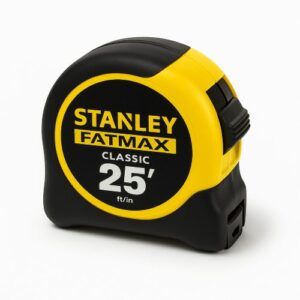
✔️ STANLEY FATMAX 25-Foot Tape Measure
A tough, reliable tape measure built for real job-site use. The STANLEY FATMAX 25′ delivers crisp easy-read markings, a strong standout, and the perfect length for woodworking and outdoor projects.
Why it’s great:
✔️ Heavy-duty, long-lasting construction
✔️ Easy-read numbers for quick, accurate measuring
✔️ 25-foot length handles indoor and outdoor projects
✔️ Smooth standout with a trusted, well-reviewed brand
GRENPRO Combination Square & Carpenter Square Set
A good square set is essential for keeping cuts straight and assemblies square from start to finish.
This GRENPRO combination and carpenter square set covers everyday layout tasks while staying lightweight, accurate, and easy to use.
 Amazon Product Suggestion:
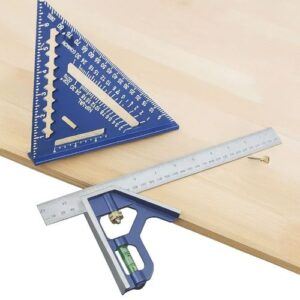
✔️ GRENPRO Combination Square & Carpenter Square Set
(7″ & 12″)
This GRENPRO square set is a beginner-friendly choice for accurate measuring and layout work, combining a 7″ carpenter square and a 12″ combination square to cover most everyday woodworking tasks. Lightweight aluminum construction, a clear stainless steel ruler, and a built-in bubble level make it easy to use and dependable for DIY projects and weekend builds.
Why It’s Great:
✔️Includes both a carpenter square and combination square
✔️Durable aluminum body with stainless steel ruler
✔️Built-in bubble level for quick accuracy checks
✔️Great value for beginner woodworking setups
2Pack Woodworking Marking Knife
Amazon Product Suggestion:
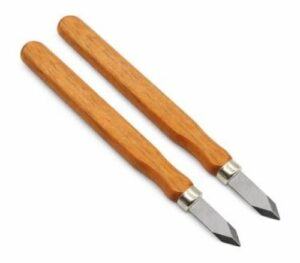
✔️ 2Pack Woodworking Marking Knife
(with High Carbon Steel Blade)
This 2-pack woodworking marking knife set is a simple but highly effective upgrade from pencils or markers. The high-carbon steel blades create crisp, precise layout lines that improve accuracy when cutting joints, trimming parts, or transferring measurements directly to the workpiece. Dual-bevel blades make them comfortable for both left- and right-handed use, while the wooden handles offer good control without hand fatigue.
Why It’s Great:
✔️High-carbon steel blades for sharp, accurate marking
✔️Dual-bevel design works for left- or right-handed users
✔️Comfortable wooden handles with solid grip
✔️ Excellent value with two knives for layout work
Final Thoughts…
Accurate measuring and marking are skills that quietly shape every successful woodworking project. When you slow down, use consistent reference points, and make clean, intentional marks,
everything that follows becomes easier — cuts fit better, joints line up cleaner,
and frustration stays off the bench.
These habits aren’t about perfection; they’re about control and confidence.
Take your time, trust your layout, and let accuracy do the heavy lifting.
Master this step early, and every project you build from here on out will reflect it.
 Craft it. Shape it. Own it!
 Need More Plans?
 Click here to learn more about Ted’s Woodworking Plans.
If you want access to hundreds of additional woodworking projects and detailed tutorials, check out my full review of Ted’s Woodworking Plans.
It’s packed with step-by-step builds that are perfect for weekend projects.

 Turn Your Woodworking Passion Into Income
Click here to learn more about Wealthy Affiliate.
SawdustSmarty.com started as a small hobby —
and it only grew once I finally learned how to build a real website.
If you’ve ever thought about turning woodworking into a side income, the training at Wealthy Affiliate is what I personally recommend.
