
When you stack Power Tools vs. Hand Tools side-by-side, the truth is simple:
Both camps will swear their way is the only way to build anything worth a damn.
Some folks insist a razor-sharp chisel and a steady hand can out-perform any machine ever made…
And others won’t cut a toothpick unless it’s powered by a lithium battery with a warranty attached.
But here’s the real scoop:
smart woodworkers know when to go old-school, when to hit the trigger, and when to mix both so you get speed and precision without tearing up your project — or your wallet.
This page cuts through all the noise and gives you the real-world differences, the strengths, the weaknesses, and exactly when each type of tool earns its keep in your shop.
No fluff, no theory — just practical advice you can actually use on your next project.
👉👉 If you’re just getting started and still building your setup,
this guide to woodworking tools for a beginner will help you understand
which tools you actually need before deciding between power tools and hand tools.

🛠️ Essential Tools That Highlight the Difference
Before we jump into the good stuff, here’s a quick look at three basic tools that perfectly show the difference between power tools and hand tools.
You’ve seen most of these in our other beginner-friendly pages — and you’ll probably use all three on half the projects you build.
Hurricane 4-Piece Wood Chisel Set
Every woodworker needs a reliable set of chisels for shaping, trimming, and fine-tuning a project.
The Hurricane 4-Piece Wood Chisel Set offers the precision and control needed to create clean, accurate cuts that elevate the quality of your work.
🌟 Amazon Product Suggestion:
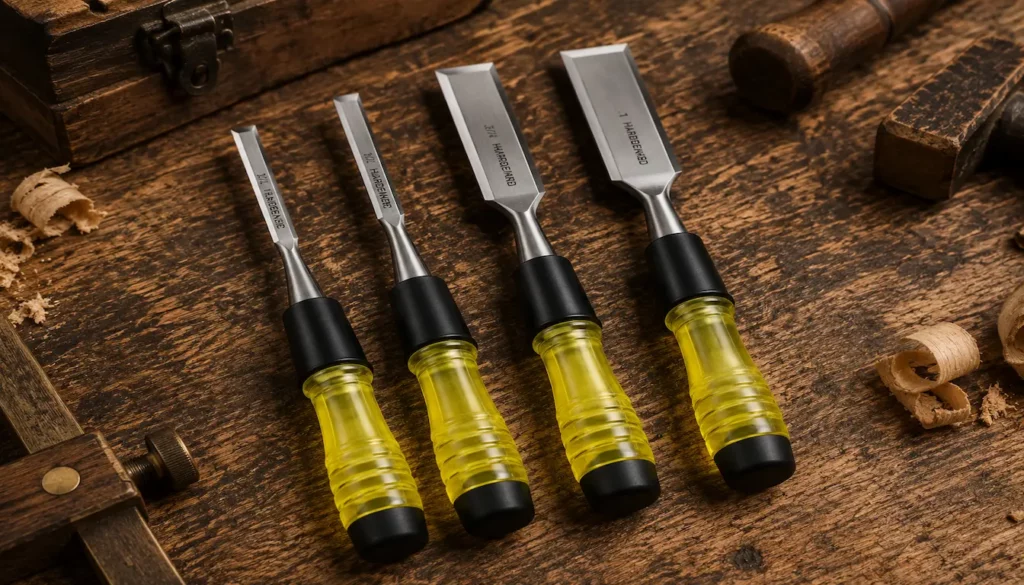
✔️Hurricane 4-Piece Wood Chisel Set
Sharp chisels are essential for fine woodworking,
allowing you to trim joints, clean up edges, and
add precise details with confidence.
The Hurricane 4-Piece Wood Chisel Set gives you
four versatile sizes that are perfect for beginners
and experienced woodworkers alike.
Why It’s Great
✔ Four popular chisel sizes for a variety of woodworking tasks.
✔ Sharp, hardened steel blades hold their edge well.
✔ Comfortable handles provide excellent control.
✔ Durable construction built for years of shop use.
DEWALT 20V Max Cordless Drill
A dependable cordless drill is one of the first power tools every woodworker should own.
The DEWALT 20V Max Cordless Drill delivers the power and precision needed for drilling, driving screws, and assembling projects with confidence.
 Amazon Product Suggestion:
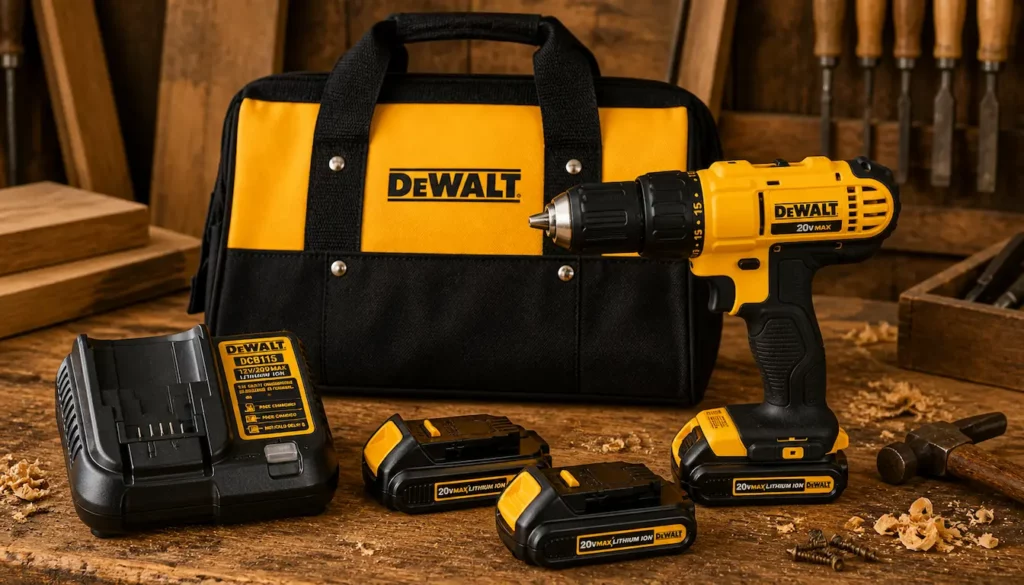
 DEWALT 20V Max Cordless Drill
A cordless drill is one of the most versatile tools you’ll own,
handling everything from drilling pilot holes to driving screws with ease.
The DEWALT 20V Max Cordless Drill combines power, comfort,
and long battery life, making it an excellent choice for
woodworking projects of every size.
Why It’s Great
✔ Powerful 20V motor for drilling and driving.
✔ Two-speed transmission for added control.
✔ Lightweight, ergonomic design reduces fatigue.
✔ Includes batteries and charger for all-day use.
SKIL 15-Amp 7-1/4″ Circular Saw
🌟 Amazon Product Suggestion:
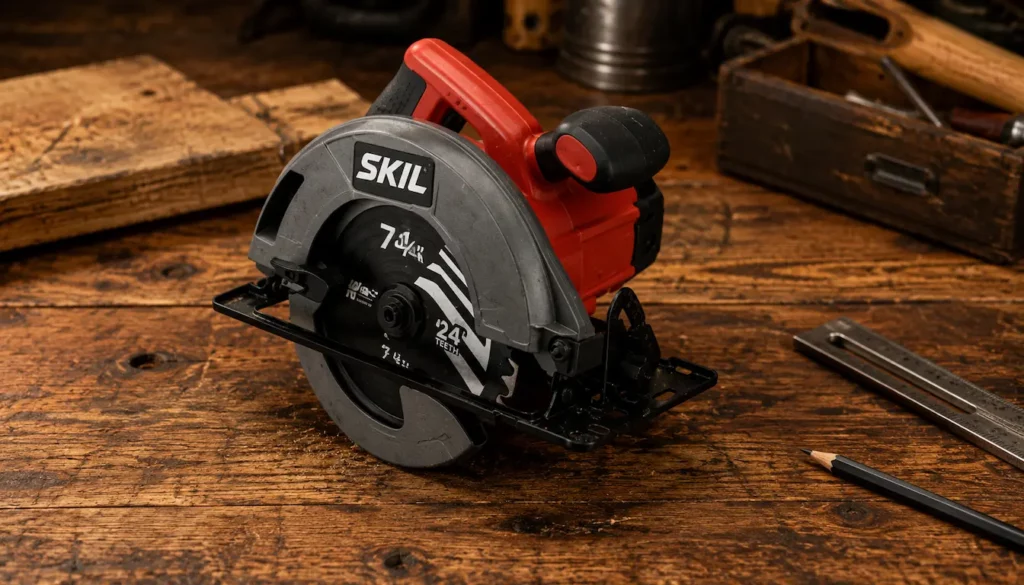
✔️ SKIL 15-Amp 7-1/4″ Circular Saw
⚔️ Power Tools Vs. Hand Tools: The Real Breakdown
Let’s be honest — nobody needs a philosophy lecture about electricity and craftsmanship.
You need the real-world differences, and here they are.
⚖️ Power Tools vs. Hand Tools: Key Differences
| Feature | Hand Tools | Power Tools |
| Speed | Slower | Much faster |
| Precision | Extremely precise in skilled hands | Fast and consistent |
| Noise | Very quiet | Loud—requires hearing protection |
| Portability | Ultra-portable | Often bulkier, need power |
| Cost | Lower entry cost | Higher upfront investment |
| Skill Learning Curve | Takes time to master | Easier to pick up |
| Maintenance | Sharpening and tuning | Cleaning, dust control, electricity |
| Safety | Safer (usually) | Higher risk—more safety precautions needed |
Speed
Power tools win by a mile. They chew through lumber like nothing.
Hand tools are slower… unless you enjoy sweating like you’re on a prison chain gang.
Control
Hand tools dominate precision.
Chisels, planes, and handsaws let you feel the cut instead of forcing it.
Skill Curve
Power tools are plug-and-play.
Hand tools take practice and patience — but the payoff is huge.
Noise & Dust
Power tools = dust clouds and noise complaints.
Hand tools = peaceful, quiet, almost therapeutic.
Safety
Power tools can ruin your day in half a second if you’re careless.
Hand tools can still bite — but you’re unlikely to lose a limb.
Cost
Power tools add up fast.
Hand tools are cheaper individually… but beware the rabbit hole of “just one more chisel.”
Accuracy
Power tools win on straight lines and consistency.
Hand tools win on finesse and cleanup.
Best For Beginners
A mix of both.
Start simple, add tools as your skills grow.
🪚 10 Practical Steps for Choosing the Right Tool Every Time
Here’s the step-by-step breakdown you can actually use in your shop.
Follow this and you’ll never grab the wrong tool again.
Step 1 — Ask: Do I need speed or control?
👉👉 Pro Tip: If you’re working on joinery or anything visible, lean toward hand tools.
Step 2 — Check the cut quality.
👉👉 Pro Tip: Circular saws tear out grain; chisels and hand saws clean it up beautifully.
Step 3 — Think about the noise level.
👉👉 Pro Tip: Late-night projects? Hand tools keep the neighbors from plotting your death.
Step 4 — Consider the material thickness.
👉👉 Pro Tip: Thick hardwood? Power tools save your sanity.
Step 5 — Look at the curve or shape you need.
👉👉 Pro Tip: Tight curves = hand tools. Straight lines = power tools.
Step 6 — Evaluate your experience level.
👉👉 Pro Tip: New to woodworking? Start with simple power tools for rough work, finish with hand tools.
Step 7 — Check the accuracy required.
👉👉 Pro Tip: If the measurement matters, slow down and work by hand.
Step 8 — Don’t forget safety.
👉👉 Pro Tip: If you’re tired, stick with hand tools. Power tools don’t care.
Step 9 — Measure twice, cut once… the old cliché is still true.
(Or… Measure once and cuss twice — your choice!)
👉👉 Pro Tip: Power tools amplify mistakes. Hand tools let you correct them.
Step 10 — Mix both for best results.
👉👉 Pro Tip: The best woodworkers use power tools for speed and hand tools for finesse.
🧠 Final Thoughts…
At the end of the day, Power Tools Vs. Hand Tools isn’t a battle — It’s a partnership.
Power tools give you speed and efficiency.
Hand tools give you control and craftsmanship.
The smartest woodworkers use both and know when each one shines.
Start small, build your toolbox slowly, and enjoy the process — That’s what woodworking is all about.
 More Builds You’ll Want to Try Next
Ready for the next project?
These builds will sharpen your skills and give you something solid to show for it:
-
How to Build a Wooden Mailbox
– A sturdy outdoor project that teaches clean layout and assembly -
Build a Simple Wooden Toolbox
– A must-have beginner build that keeps your tools organized -
DIY Display Case –
Practice clean joinery with a project that actually looks great -
Craft a Kids’ Stool in 5 Steps
– Quick, simple, and perfect for dialing in your basics
Every project builds skill — the next one is where things start to click.
You got this!
 Craft it. Shape it. Own it!