
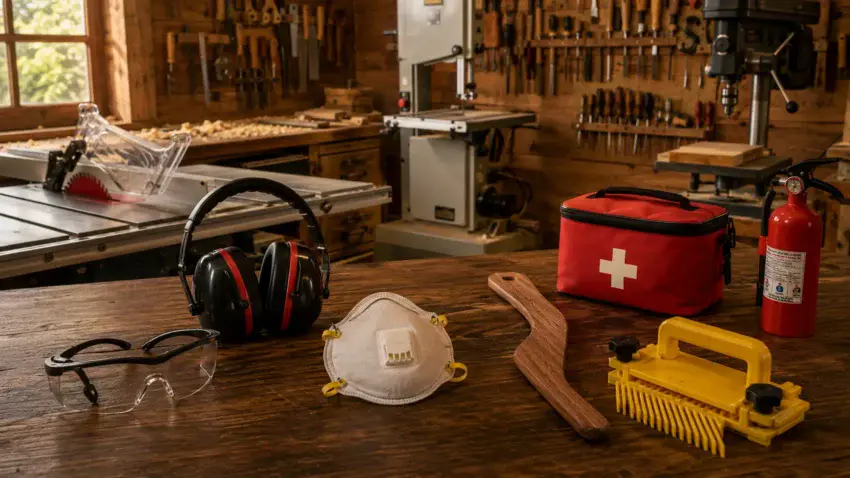
Small shops have big risks if you don’t build good habits. Today, I’ll walk you through the essential shop-safety basics every beginner (and even us seasoned sawdust-junkies) need to follow to keep every cut clean and every project fun.
👉 New to woodworking? Start with Essential Woodworking Tools for Beginners to learn which tools belong in every small shop, how to use them safely, and which ones are worth buying first. A well-equipped workshop is one of the best ways to work smarter and stay safe.

👓 Why Woodshop Safety Matters More Than You Think
Small woodworking shops pack a ton of creativity into tight spaces — Which also means the risks stack up fast. Tools are closer together, you’re working in compact areas, and distractions can sneak up on you quicker than a kickback.
Safety isn’t about slowing you down.
It’s about staying in control, injury-free, and able to keep building day after day.
In this section, we’ll break down the most important safety habits every home woodworker should master so your projects stay fun, productive, and accident-free.
3M 8511 N95 Respirator
A reliable N95 mask is your first line of defense against fine sawdust — The stuff that irritates your lungs, clogs your sinuses, and lingers in the air long after the tools are off. A good N95 keeps your breathing clean so you can work longer and stay healthier in a small, enclosed shop.
🌟 Amazon Product Suggestion:
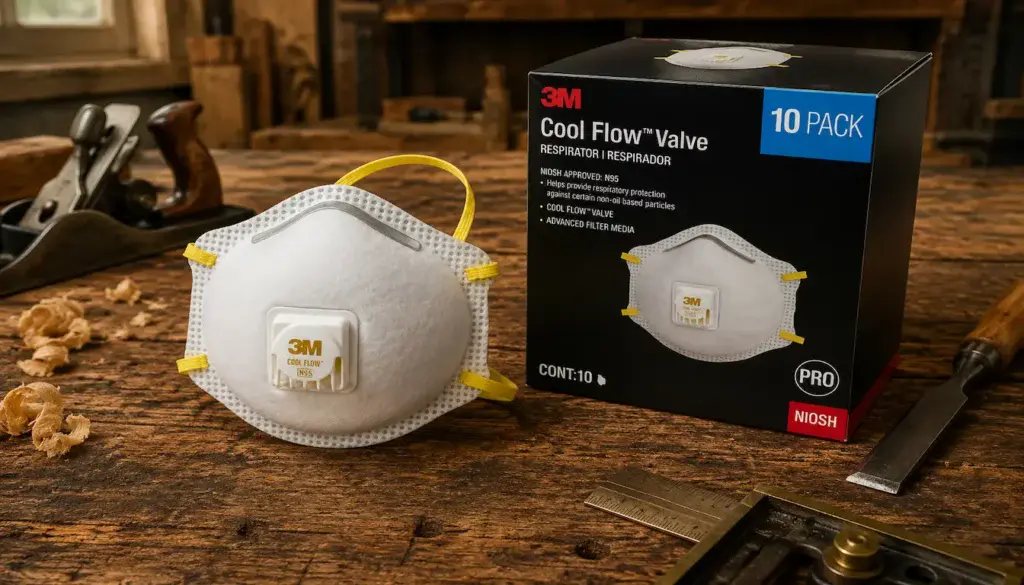
✔️3M 8511 N95 Respirator
This 3M 8511 N95 respirator is a must-have safety essential in any woodworking shop —
perfect for sanding dust, fine particulates, and airborne debris.
It’s comfortable, breathable, and built for long sessions at the bench.
The Cool Flow™ valve drastically reduces heat and moisture inside the mask,
making it far easier to breathe while keeping a secure seal.
Why it’s great
✔ N95 filtration for fine wood dust
✔ Cool Flow™ valve keeps you cooler
✔ Comfortable, secure fit
✔ Ideal for sanding, cutting, and routing
NoCry Clear Safety Glasses
Wood chips, splinters, and flying debris don’t give warnings. A solid pair of safety glasses protects your eyes whether you’re cutting, drilling, chiseling, or sanding. Clear, impact-resistant lenses give you confidence to work up close — without sacrificing visibility.
🌟 Amazon Product Suggestion:
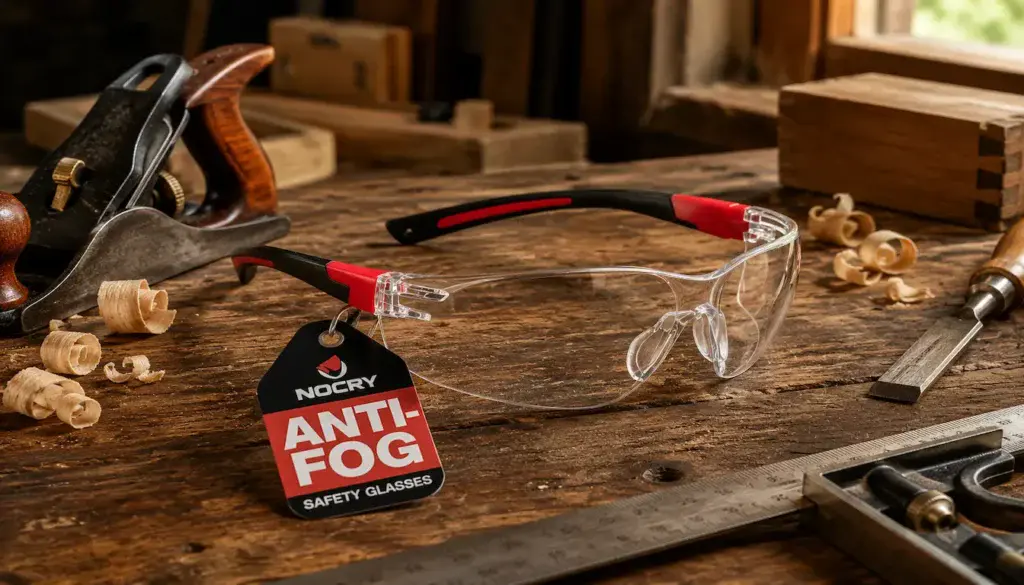
✔️ NoCry Clear Safety Glasses
These NoCry clear safety glasses are a rock-solid upgrade
for any woodworking setup — perfect for cutting, sanding,
routing, or any project where chips and dust
like to fly straight at your face.
They’re lightweight, crystal-clear, and extremely comfortable
thanks to the adjustable temples and soft nose pads.
Why it’s great
✔ ANSI Z87 certified protection
✔ Anti-fog, scratch-resistant lenses
✔ Adjustable temples for comfort
✔ Lightweight wraparound design
POWERTEC 5-Piece Push Block & Push Stick Set
Table saws, jointers, and bandsaws demand respect — and safe distance. A simple push stick keeps your hands far from the blade while giving you better control of narrow cuts. It’s one of the cheapest, most important pieces of safety gear you’ll ever own.
🌟 Amazon Product Suggestion:

✔️ POWERTEC 5-Piece Push Block & Push Stick Set
This POWERTEC 5-piece safety set is one of the best upgrades you can make to your shop workflow — giving you rock-solid control during rip cuts, routing, and jointing.
Bright, grippy, and dead-simple to use, these blocks keep your hands far from the blade while boosting cut accuracy.
The high-traction bottoms press your stock firmly down and forward, helping reduce kickback and giving you way more confidence on every cut.
Why it’s great
✔ Multiple push blocks and push sticks for safer cuts
✔ High-grip bases provide better control
✔ Comfortable ergonomic handles reduce fatigue
✔ Ideal for ripping, routing, and narrow stock safely
✅ Essential Woodshop Safety Rules For Small Shops 🔥
Rule 1: Keep Your Work Area Clean & Uncluttered
A clean shop is a safe shop. Clutter on the bench, scraps on the floor, and tools scattered around create trip hazards, snag hazards, and distraction hazards.
Keeping surfaces clear helps you stay focused and reduces accidents.👉👉 PRO TIP: Do a 30-second cleanup every time you switch tools — it adds up fast.
Rule 2: Always Wear Proper Eye, Ear & Dust Protection
Small shops trap dust and noise quickly. Eye protection keeps flying chips from ending your workday early. Hearing protection prevents long-term damage. Dust masks or respirators protect your lungs —
Especially with MDF or hardwoods.
👉👉 PRO TIP: Keep all your PPE hanging on one hook so you never “forget it.”
Rule 3: Respect Every Blade, Bit & Cutting Edge
Saws, routers, chisels, and planers don’t care how experienced you are — Dull blades grab, sharp ones cut clean, and both can injure you if misused.
Treat every edge like it’s hot, sharp, and ready to bite.👉👉 PRO TIP: If a cut or operation feels sketchy… it is. Fix the setup.
Rule 4: Never Work Tired, Rushed, or Distracted
Fatigue, stress, and rushing cause more injuries than bad tools. When you’re not fully focused, mistakes happen — often fast.
Slow down and reset your mind before touching a cutting tool.
👉👉 PRO TIP: If you catch yourself “just trying to finish real quick,” stop immediately.
Rule 5: Use Clamps and Supports Instead of Your Hands
Your hands are not clamps. Secure your workpiece with clamps, vises, jigs, or support blocks.
This prevents slipping, twisting, and kickback during cuts.👉👉 PRO TIP: If your hands are within 6 inches of a blade, change something.
Rule 6: Maintain Proper Lighting & Visibility
Shadows hide hazards. Dim lighting makes it harder to see lines, grain, and blade position.
Good overhead and task lighting dramatically improves accuracy and safety.
👉👉 PRO TIP: Add a cheap LED gooseneck light above your main workstation.
Rule 7: Check Your Tools Before Every Use
Loose parts, damaged cords, wrong blades, and missing guards create instant danger.
A quick inspection before powering up keeps you from walking into a preventable disaster.
👉👉 PRO TIP: Make it a habit to test switches, fences, and blade clearance every time.
Rule 8: Control Dust at the Source
Fine dust is the silent shop danger—harder to see, worse for your lungs, and extremely flammable.
Use a dust collector, shop-vac, or air filter whenever possible.
👉👉 PRO TIP: If you can see the air shimmering in the light, your filtration needs help.
Rule 9: Keep a First Aid Kit & Fire Extinguisher Nearby
Accidents happen fast, and small shops fill with fumes, heat, and dust that can ignite.
A well-stocked first aid kit and a small ABC-rated extinguisher are essential safety gear.
👉👉 PRO TIP: Store the extinguisher near the door — never behind the danger.
Rule 10: Develop Safe Habits & Repeat Them Every Time
Safety isn’t a one-time rule — it’s a routine. The shops with the fewest accidents are the ones where good habits happen automatically.
Repetition builds instinct, and instinct keeps you safe.
👉👉 PRO TIP: Practice safety habits until they feel natural and effortless.
🏁 Final Thoughts…
Woodworking is one of the most rewarding hobbies you can take on, but it demands respect every time you step into the shop.
When you follow these simple safety rules — staying alert, keeping your space clean, wearing proper protection, and using the right techniques — you set yourself up for years of enjoyable, injury-free building.Safe woodworkers build more projects, learn faster, and stay confident at the bench. Treat safety as part of your workflow, not an afterthought, and your small shop will feel bigger, smoother, and far more fun to work in.
 More Builds You’ll Want to Try Next
Ready for the next project?
These builds will sharpen your skills and give you something solid to show for it:
-
How to Build a Wooden Mailbox – A sturdy outdoor project that teaches clean layout and assembly
-
Build a Simple Wooden Toolbox – A must-have beginner build that keeps your tools organized
-
DIY Display Case – Practice clean joinery with a project that actually looks great
-
Craft a Kids’ Stool in 5 Steps – Quick, simple, and perfect for dialing in your basics
Every project builds skill — the next one is where things start to click.
 Craft it. Shape it. Own it!