

**Understanding wood grain — and why it matters in every cut — **
Starts with recognizing the mistakes it can cause when ignored.
If you’ve ever torn out a splintered edge on the jointer, had your chisel skip instead of slice,
or burned a board on the table saw, there’s a good chance wood grain had something to do with it.
Understanding wood grain isn’t just for old-school woodworkers or furniture masters —
It’s the foundation of working smarter in any shop.
Whether you’re crosscutting a 2×4 or carving a decorative inlay,
the grain determines how wood behaves under your tools.
In this guide, we’ll break down what wood grain is, why it matters, and how to read it like a pro —
So, you can make cleaner cuts, stronger joints, and better-looking projects.

🪵 What Is Wood Grain?
Wood grain refers to the direction, pattern, and texture of wood fibers in a board.
These fibers are essentially the long cells of the tree that ran vertically up the trunk.
When you cut lumber from a tree, you’re slicing across or along these fibers.
The way those fibers are arranged determines how the wood will cut, plane, sand, stain, and even crack.
 Jack Plane
A hand plane is one of the best tools for learning how wood grain behaves under a cutting edge.
This low-angle jack plane clearly shows the difference between planing with the grain and against it, helping you understand why grain direction matters before making any cut.
 Amazon Product Suggestion:
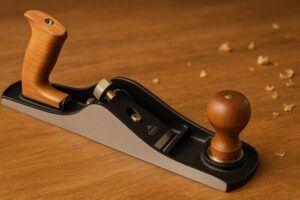
 STANLEY No.62 Low Angle Jack Plane
The STANLEY No.62 is a versatile low-angle jack plane built for clean, controlled cuts. Its heavy A2 steel iron handles tough grain easily, while the cherry tote and knob give it a classic, comfortable feel. Perfect for smoothing, flattening, shooting, and general shop work — a reliable daily-use plane.
Why It’s Great:
Essential for fairing and smoothing long curves
Heavy enough for clean cuts, light enough for control
Perfect for trimming planks and shaping frames
A must-have tool for any traditional boat build
Hurricane 4-Piece Wood Chisel Set
Chisels make wood grain behavior easy to see and feel, especially when
working across end grain or paring along a layout line.
A sharp chisel set lets you control the cut direction, reduce tear-out,
and better understand how grain affects precision work.
Amazon Product Suggestion:
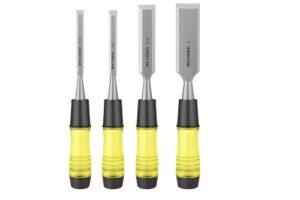
Hurricane 4-Piece Wood Chisel Set
(CR-V Steel)
A sharp set of chisels is absolutely essential for dovetails, and this Hurricane set delivers serious performance on a budget. CR-V steel holds an edge well, the handles are tough, and the size selection hits every dovetail task — from cleaning waste to paring to your shoulder lines.
Why It’s Great:
Essential for tight joinery and clean-up work
Perfect for frame notches, mortises, and bevel adjustments
A versatile staple for any serious woodworking project
Durable enough for hardwoods and marine ply
GRENPRO Combination Square & Carpenter Square Set
Before making any cuts, accurate layout is key.
A good combination square and carpenter square help you mark straight lines,
check for square, and line everything up properly from the start.
Amazon Product Suggestion:
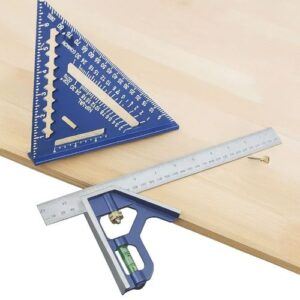
GRENPRO Combination Square & Carpenter Square Set
(7″ & 12″)
This GRENPRO square set is a beginner-friendly choice for accurate measuring and layout work, combining a 7″ carpenter square and a 12″ combination square to cover most everyday woodworking tasks. Lightweight aluminum construction, a clear stainless steel ruler, and a built-in bubble level make it easy to use and dependable for DIY projects and weekend builds.
Why It’s Great:
✔ Includes both a carpenter square and combination square
✔ Durable aluminum body with stainless steel ruler
✔ Built-in bubble level for quick accuracy checks
✔ Great value for beginner woodworking setups
🌲 Types of Wood Grain Patterns
Here are the most common types of wood grain patterns you’ll come across:
1. Straight Grain
Fibers run in mostly one direction — easy to work with, ideal for strength.
2. Curly or Wavy Grain
Fibers twist and turn — beautiful to look at, but tricky to plane or rout.
3. Interlocked Grain
Fibers weave together — common in tropical hardwoods, often tear-out prone.
4. Spiral Grain
Fibers twist around the trunk — adds visual interest but can weaken structural pieces.
5. Cross Grain
Fibers run perpendicular or at angles — hard on blades and prone to tear-out.
Understanding what type of grain you’re working with helps you predict how it’ll behave when you cut or shape it.
🔍 Why Grain Direction Matters
Let’s talk about some real-world ways grain direction affects your woodworking:
🪚 1. Cutting and Planing
Going with the grain = smooth surface.
Going against the grain = tear-out city.
 Pro Tip: When planing or jointing, look for the grain to slope downward away from your tool’s cutting edge. That’s usually the direction you want to go.
🔨 2. Joinery Strength
Grain direction impacts how strong a joint will be. For example:
- End grain gluing is weak — fibers suck up glue but don’t bond well.
- Long grain to long grain joints (like edge gluing boards) are much stronger.
🎯 3. Staining and Finishing
Grain absorbs stain differently:
- Open-grain woods like oak and ash soak in more stain.
- Tight-grain woods like maple may look blotchy if not prepped properly.
The grain pattern also enhances (or hides) the beauty of the wood under clear coats or oil finishes.
🪛 4. Screw and Nail Holding Power
Screws hold much better in long grain than end grain.
Driving screws into end grain can split the wood or leave a weak joint
unless pre-drilled and reinforced.
🧭 How to “Read” the Grain
Think of grain like a roadmap — it’ll tell you which way to go if you know how to read it.
🧩 1. Look at the Edge of the Board
If the lines slope upward → planing against the grain.
If they slope downward → planing with the grain.
📏 2. Watch the Surface Pattern
Cathedral or flame shapes on face grain often indicate direction.
The “point” usually faces against the grain.
🪵 3. Use Your Fingertips
Run your hand along the board.
One direction may feel smoother than the other — that’s usually with the grain.
💥 What Happens When You Ignore the Grain?
Not paying attention to grain can lead to:
- Tear-out on the jointer or planer
- Chisel skips instead of clean cuts
- Splintered edges when routing
- Weakened joints if glued improperly
- Warping or cracking in finished projects
Even expensive wood will give poor results if the grain fights your tools.
🧰 Tools That Help With Grain Awareness
You don’t need fancy tech to deal with grain, but here are a few things that help:
- Sharp blades and bits – A must when working with wild grain.
- Low-angle planes – Great for reversing or figured grain.
- Scrapers and sanding blocks – For finishing against the grain.
- Grain-orientation diagrams – Sketch your layout before cutting to minimize grain issues.
💡 Grain and Project Design
Thinking about grain direction early in your design phase can:
- Improve strength (especially in chair legs, tabletops, and doors)
- Enhance appearance (book matching or quarter-sawn effects)
- Prevent seasonal movement (grain shrinks/swells across its width)
Pro Tip: Keep grain running the same direction when gluing up panels. It avoids warping and makes sanding much easier.
🧠 Final Thoughts…
Grain might look like a simple pattern on a board — but in reality, it’s the blueprint of the tree itself. Understanding it will not only make you a better woodworker, but it’ll also save you time, frustration, and material waste.
Next time you pick up a board, take a second to read the grain.
Your cuts will be cleaner, your finishes smoother, and your projects better all around.
More Woodworking Projects You’ll Enjoy
Here are a few other beginner-friendly project ideas you can try next:
-
How to Build a Wooden Mailbox – A sturdy outdoor project that teaches accurate layout and assembly.
-
Build a Simple Wooden Toolbox – A classic beginner project and a great way to organize your tools.
-
DIY Display Case – Learn clean joinery with a project that looks great in any room.
-
Craft a Kids’ Stool in 5 Steps – A quick build that teaches essential cutting and measuring skills.
These projects help you grow your skills while creating something you’ll enjoy for years to come.
You got this!
 Craft it. Shape it. Own it!
 Need More Woodworking Plans?
Click here to learn more about Ted’s Woodworking Plans:
If you want hundreds of additional project ideas with clear step-by-step instructions, my full review breaks down exactly what you get inside Ted’s Woodworking Plans.
It’s a great resource if you like weekend builds, simple jigs, or classic shop projects.
Check out the full review here → Ted’s Woodworking Plans

 Turn Your Woodworking Passion Into Income
Click here to learn more about Wealthy Affiliate
SawdustSmarty started as a simple hobby.
It grew because I finally learned how to build a real website — the right way. If you’ve ever thought about turning woodworking into a side business or income stream, Wealthy Affiliate is the training I personally recommend.
Click here to read more → Wealthy Affiliate

Is this Chat GPT generated?
Thanks for the question.
While I do use modern tools to help organize and edit my writing, the information in this article comes from real woodworking experience and research.
SawdustSmarty is focused on helping beginners understand practical shop concepts like wood grain, tool use, and project techniques in a clear way.
My goal is simply to make woodworking easier to learn and more approachable for new builders.
If you have any questions about grain direction or cutting techniques, feel free to ask — I’m always happy to help.
Thanks again,
~Wayne