
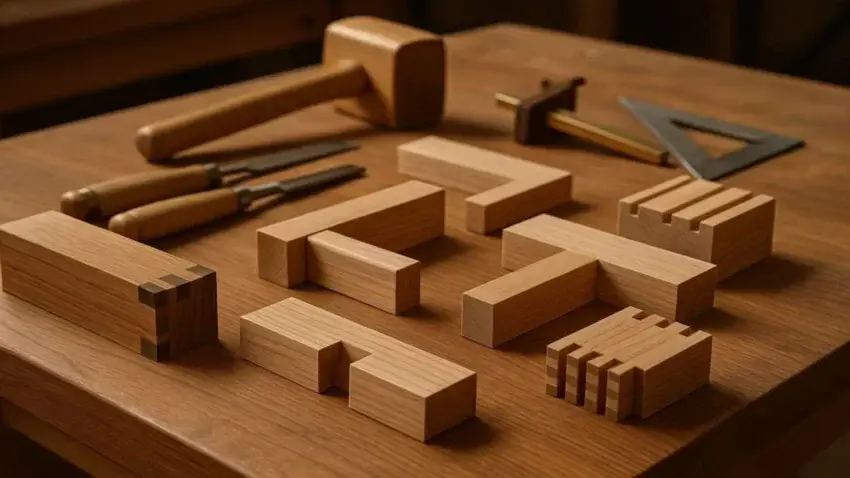
Wood joinery is the foundation of every strong, long-lasting woodworking project.
From cabinets and furniture to frames and shop builds, the way two pieces of wood are joined determines not only how a project looks, but how well it holds up over time.
Choosing the right joint can mean the difference between a piece that lasts for decades and one that loosens, shifts, or fails altogether.
In this guide, Top 5 Wood Joinery Methods Explained, we break down the most common and
time-tested joinery techniques used in woodworking today.
You’ll learn how each joint works, where it excels, and when it makes sense to use one method over another.
Whether you’re just getting started or refining your skills,
understanding these core joints will help you build projects that are
stronger, cleaner, and more professional from the very first cut.
Mastering a few proven joinery methods will take you farther than chasing complicated techniques too early.

🔨 Tool Section Introduction
Precise joinery starts before glue is applied —
With accurate layout, controlled cuts, and clean-fitting joints.
You don’t need an overstuffed shop to build strong, professional joinery;
these three tools cover the fundamentals and give you the control needed for clean, reliable results.
Olfa Hobby Saw 167B
The Olfa Hobby Saw 167B is ideal for fine joinery work where
control and precision matter more than speed.
Its thin blade allows for clean, accurate cuts when trimming
small components, refining joints, or working in tight spaces.
 Amazon Product Suggestion:
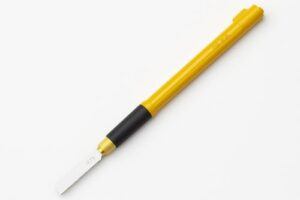
 Olfa Hobby Saw 167B
A lightweight precision saw that’s perfect for beginners learning dovetail layout cuts.
The thin blade makes it easy to sneak into tight spaces, trim pins or tails, and clean up lines without removing too much material.
It’s surprisingly capable for its size and gives you great control for fine detail work.
Why It’s Great:
Thin, flexible blade for precision trimming
Ideal for beginners practicing dovetail layout cuts
Super affordable and extremely sharp
Great for tight spaces and cleanup cuts
Hurricane 4-Piece Wood Chisel Set
The Hurricane 4-Piece Wood Chisel Set provides the essential sizes needed for
shaping, cleaning, and refining traditional wood joints.
Made from durable CR-V steel, these chisels offer reliable edge retention and the
control needed for tight, accurate joinery work.
Amazon Product Suggestion:
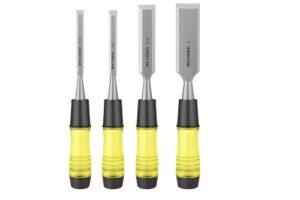
Hurricane 4-Piece Wood Chisel Set
(CR-V Steel)
A sharp set of chisels is absolutely essential for dovetails, and this Hurricane set delivers serious performance on a budget. CR-V steel holds an edge well, the handles are tough, and the size selection hits every dovetail task — from cleaning waste to paring to your shoulder lines.
Why It’s Great:
Four essential sizes for dovetail work
CR-V steel stays sharp and durable
Comfortable handles with great control
Perfect balance of price and performance
Knew Concepts Dovetail Saw
The Knew Concepts Dovetail Saw is built for precision joinery where straight,
accurate cuts are critical.
Its rigid frame and thin blade make it ideal for cutting dovetails,
tenons, and other fine joints with clean, repeatable results.
Amazon Product Suggestion:
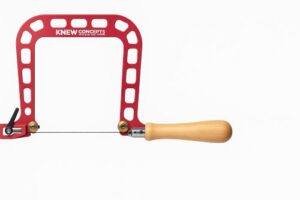
Knew Concepts Dovetail Saw
If you want the Ferrari of dovetail saws, this is it. Knew Concepts is famous for ultra-rigid frames, insanely thin blades, and whisper-clean cuts. This is the saw that takes your dovetail work from
“pretty good” to “holy crap, that’s clean.”
Why It’s Great:
Ultra-lightweight frame = unbeatable control
Thin, razor-sharp blade for silky smooth cuts
Zero flex = more accuracy and cleaner shoulders
A long-term investment for serious joinery work
🔨 1. Butt Joint: The Simplest Wood Joinery Method
The butt joint is the most basic form of wood joinery,
created by joining the end of one board directly to the face or edge of another.
Because it requires minimal tools and setup, it’s often the first joint beginners learn
and one of the most commonly used joints in everyday woodworking.
On its own, a butt joint relies primarily on fasteners or adhesive
for strength rather than interlocking wood fibers.
While this makes it quick and easy to assemble, it also means
the joint is weaker than more advanced joinery methods if left unreinforced.
When to Use a Butt Joint
Butt joints work best in projects where speed and simplicity matter more than maximum strength. They’re commonly used for shop projects, basic frames, shelving, and temporary or utility builds where structural loads are light.
Strength and Durability
By itself, a butt joint has low strength, especially when exposed to stress or weight. However, adding glue, screws, nails, dowels, or corner blocks can significantly improve durability and make the joint suitable for many practical applications.
👉👉 Pro Tip: Always glue a butt joint, even when using screws or nails.
Glue increases surface contact and helps prevent movement over time,
while fasteners provide immediate holding power during assembly.
🔨 2. Lap Joint: Simple Strength Through Overlap
A lap joint is created by overlapping two pieces of wood and removing material from each so they sit flush when joined. This overlap increases surface contact, making the joint noticeably stronger than a basic butt joint while still remaining easy to cut and assemble.
Because lap joints distribute stress across a wider area, they offer improved durability without requiring complex layouts or specialty tools. This makes them a popular step up for woodworkers looking to add strength without jumping into advanced joinery.
When to Use a Lap Joint
Lap joints are well suited for frames, table bases, face frames, and structural assemblies where added strength is needed but appearance is still secondary. They’re commonly used in utility furniture, shop fixtures, and projects where joints may be partially visible.
Strength and Durability
A properly fitted lap joint offers medium strength, especially when combined with wood glue. The increased glue surface and mechanical overlap help resist racking and twisting better than end-grain joints.
👉👉 Pro Tip: Remove material slowly and test-fit often.
A snug lap joint should slide together with light pressure —
Forcing it can weaken the joint or throw the assembly out of square.
🔨 3. Mortise and Tenon: A Time-Tested Structural Joint
The mortise and tenon joint is one of the strongest and most reliable forms of traditional wood joinery.
It consists of a tenon (a projecting tongue) that fits tightly into a mortise (a matching cavity), creating a joint that locks pieces together both mechanically and with glue.
This joint has been used for centuries in furniture, doors, and structural woodworking
because it handles stress exceptionally well.
When properly fitted, a mortise and tenon joint resists pulling, twisting,
and racking far better than simpler joinery methods.
When to Use a Mortise and Tenon Joint
Mortise and tenon joints are ideal for furniture frames, table bases, chair construction, doors, and any project where strength and longevity are critical. They’re especially useful in load-bearing assemblies where joints must remain tight over time.
Strength and Durability
A well-cut mortise and tenon joint offers high strength and excellent long-term durability. The interlocking design provides mechanical support even before glue is applied, making it one of the most trusted joints in fine woodworking.
👉👉 Pro Tip: Cut the mortise first, then size the tenon to fit. This approach allows you to fine-tune the tenon for a tight, gap-free joint without over-cutting the mortise.
🔨 4. Dovetail Joint: Strength You Can See
The dovetail joint is known for both its strength and its distinctive interlocking shape.
The angled “tails” and “pins” mechanically lock the joint together,
making it exceptionally resistant to pulling apart even without fasteners.
Because of its visual appeal and durability, the dovetail joint is often used in
fine furniture and visible joinery.
It’s a favorite for drawers and boxes where both strength and craftsmanship are on display.
When to Use a Dovetail Joint
Dovetail joints are best used in drawers, cabinets, boxes, and casework where joints are
exposed and expected to last for decades.
They’re especially effective in applications where repeated movement or weight would
stress simpler joints.
Strength and Durability
A properly cut dovetail joint provides very high strength, particularly in tension.
The mechanical locking design allows the joint to remain secure even under heavy use,
making it one of the most durable joinery methods available.
👉👉 Pro Tip: Focus on accuracy over speed.
Clean layout lines and careful cuts matter more than rushing —
Small errors are easy to spot in dovetails and hard to hide.
🔨 5. Box Joint (Finger Joint): Strong and Repeatable
The box joint, also known as a finger joint, is made by interlocking square
“fingers” cut into two pieces of wood.
This design creates a large glue surface and a strong mechanical bond,
making it an excellent alternative to dovetails when strength matters more than decorative flair.
Box joints are popular for projects that require clean lines, repeatable cuts, and reliable strength.
With the help of jigs or templates, they’re easy to reproduce accurately, even in batch builds.
When to Use a Box Joint
Box joints are ideal for drawers, storage boxes, cabinets, and shop-built organizers.
They’re commonly used when consistency and efficiency are important,
especially for projects with multiple identical joints.
Strength and Durability
A properly glued box joint offers high strength thanks to its large surface area and interlocking design. While it doesn’t resist pulling forces as effectively as dovetails, it performs exceptionally well in most furniture and storage applications.
👉👉 Pro Tip: Use a test piece before cutting your final parts. Dialing in finger spacing and fit on scrap wood prevents loose joints or gaps that can’t be corrected later.
📊 Wood Joinery Comparison at a Glance
| Joinery Method | Strength Level | Difficulty | Best Used For | Common Tools Needed |
|---|---|---|---|---|
| Butt Joint | Low | Easy | Simple frames, shop projects, quick builds | Saw, drill, clamps |
| Lap Joint | Medium | Easy–Moderate | Frames, table bases, utility furniture | Saw, chisel, square |
| Mortise and Tenon | High | Moderate | Furniture frames, doors, chairs | Saw, chisel, mallet |
| Dovetail Joint | Very High | Advanced | Drawers, cabinets, fine furniture | Dovetail saw, chisels |
| Box (Finger) Joint | High | Moderate | Boxes, drawers, storage projects | Saw, jig, chisels |
🧠 Final Thoughts on Wood Joinery
Understanding wood joinery is about more than memorizing joints —
It’s about knowing when to use each method and why it works.
From simple butt joints to time-tested mortise and tenon construction,
choosing the right joint leads to stronger builds, cleaner results, and projects that hold up over time.
As your skills grow, mastering these core joinery methods will give you the confidence to tackle more complex woodworking projects without overcomplicating the process.
Start simple, focus on accuracy, and let strong joinery do the heavy lifting.
 More Woodworking Projects You’ll Enjoy
Here are a few other beginner-friendly project ideas you can try next:
-
How to Build a Wooden Mailbox – A sturdy outdoor project that teaches accurate layout and assembly.
-
Build a Simple Wooden Toolbox – A classic beginner project and a great way to organize your tools.
-
DIY Display Case – Learn clean joinery with a project that looks great in any room.
-
Craft a Kids’ Stool in 5 Steps – A quick build that teaches essential cutting and measuring skills.
These projects help you grow your skills while creating something you’ll enjoy for years to come.
You got this!
 Craft it. Shape it. Own it!
 Need More Plans?
 Click here to learn more about Ted’s Woodworking Plans.
If you want access to hundreds of additional woodworking projects and detailed tutorials, check out my full review of Ted’s Woodworking Plans.
It’s packed with step-by-step builds that are perfect for weekend projects.

 Turn Your Woodworking Passion Into Income
Click here to learn more about Wealthy Affiliate.
SawdustSmarty.com started as a small hobby —
and it only grew once I finally learned how to build a real website.
If you’ve ever thought about turning woodworking into a side income, the training at Wealthy Affiliate is what I personally recommend.
