

Wood inlay is one of those woodworking techniques that looks complicated, but once you understand the basics, it opens the door to some insanely beautiful projects. In this Beginner’s Guide to Wood Inlay, I’ll walk you through the tools you need, how the process actually works, and a few simple techniques you can use to start adding clean, crisp inlays to everything from boxes and cutting boards to guitars and furniture.
Whether you’re experimenting with veneer, epoxy, or pre-cut inlay pieces, this guide breaks the whole process down step-by-step so you can get consistent, clean results — even if you’ve never tried inlay work before.

🪵 What Is Wood Inlay?
Wood inlay is the process of cutting a shallow recess into a project and fitting a contrasting material into that space. The material can be wood veneer, metal, shell, stone, epoxy, or pre-cut inlay shapes — anything that sits flush with the surface and creates a decorative design.
Inlay looks fancy, but it’s really just a combination of three things:
-
Accurate layout
-
Clean recesses
-
A tight-fitting insert
Once you get these parts down, you can add inlays to boxes, cutting boards, signs, shelves, furniture, instruments — pretty much anything made of wood.
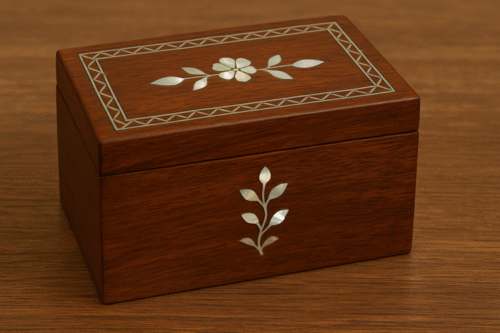
A handcrafted wooden box featuring elegant mother-of-pearl inlays, showcasing how small projects can transform with simple inlay techniques.
🔧 Essential Tools for Wood Inlay
You don’t need a shop full of equipment to get started with wood inlay. A few accurate cutting tools and some small layout essentials will carry you a long way.
Here are the basics most beginners use:
✔ Precision Knife or Craft Knife
Used for scoring clean layout lines and cutting veneer. A sharp knife makes tighter inlay joints and reduces chip-out.
✔ Small Chisels or Micro-Gouges
Perfect for cleaning the edges of your recess so your inlay drops in neatly. Even one or two small chisels make a huge difference.
✔ Dremel or Rotary Tool (with Inlay Base)
This is by far the easiest way to remove material for the recess. A plunge base keeps the depth consistent and gives razor-clean outlines.
🌟 Amazon Product Suggestion:
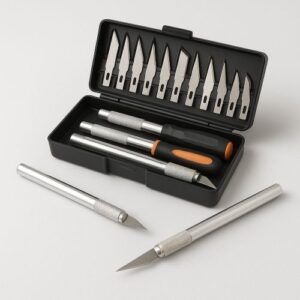
✔️ Jetmore 16-Piece Precision Craft Knife Set
Perfect for cutting veneer, trimming inlay pieces, shaping delicate details, and making clean layout lines.
This 16-piece Jetmore knife kit gives you the kind of clean, steady control you need for inlay work.
Cutting veneer, trimming tiny shapes, scoring layout lines — this set handles all the fussy stuff without flexing or tearing like the bargain-bin knives do.
With 3 craft handles and 13 SK5 steel blades, you always have the right blade for the job — and the protective case keeps everything organized for fast swaps during wiring or shielding.
Why It’s Great:
✓ Ultra-sharp SK5 steel blades — perfect for cutting and trimming small inlay pieces,
and also scoring clean layout lines
✓ Multiple handles — better grip and better control for fine detail work
✓ Great for tiny shapes — makes cutting curves, leaves, petals, and borders much easier
✓ Precision cuts — helps reduce chip-out and keeps inlay joints tight and seamless
✓ Compact case — keeps blades organized, labeled, and safe in your tool kit
✓ High value, low cost — a budget-friendly way to get all the blades you need for inlay work
🌟 Amazon Product Suggestion:
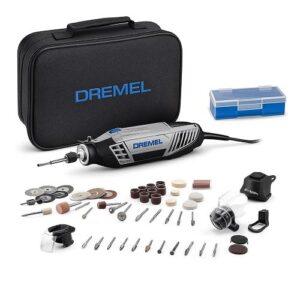
✔️ Dremel 4300-5/40 High-Performance Rotary Tool Kit
Perfect for cutting clean inlay recesses, shaping details, and removing material with control.
This Dremel 4300 gives you smooth, consistent cuts for wood inlay work. The variable speed, bright LED light, and easy bit changes make it beginner-friendly and great for tight, precise recesses.
Why It’s Great:
✓ Variable speed — dial in the perfect control for delicate cuts
✓ LED light — see layout lines and details clearly
✓ 40 accessories included — plenty for shaping, sanding, and carving
✓ Great for inlay recesses — clean, smooth removal without tearing the wood
✓ Comfort grip — easy to handle for slow, detailed work
✓ Durable storage case — stays organized in your shop
✔ Veneer Sheets or Pre-Cut Inlay Pieces
You can cut your own shapes, or buy ready-made leaves, flowers, diamonds, borders — anything you want to add to a project.
✔ CA Glue or Wood Glue
Thin CA glue is a favorite for tiny pieces because it wicks into the gaps. Wood glue works great for larger veneer inlays.
🌟 Amazon Product Suggestion:
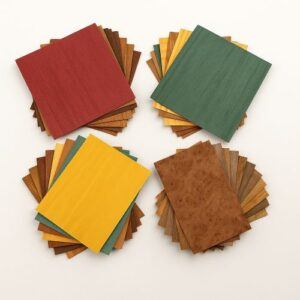
✔️ Peachtree Veneer Variety Pack
(for Marquetry & Inlay Work)
Great for cutting your own inlay shapes and adding contrast to small projects. This mixed veneer pack includes domestic, exotic, and dyed woods — all thin, flexible, and easy to cut with a craft knife.
Why It’s Great:
✓ Big variety — multiple colors and species for strong contrast
✓ Easy to cut — perfect for small inlay details and marquetry
✓ Plenty of material — 15 sq. ft. is great for practice and projects
✓ Consistent thickness — fits cleanly into shallow recesses
✓ Good value — lots of veneer for the price
🌟 Amazon Product Suggestion:

✔️ Mitreapel CA Glue With Activator
(Fast, Clean, And Strong)
Why It’s Great:
✓ Instant bond — activator locks pieces together in seconds
✓ No clamps needed — perfect for small parts, trim, and box corners
✓ Dries clear — no visible glue lines on walnut or other dark woods
✓ Strong hold — reliable on wood, plastic, and mixed materials
✓ Huge time-saver — ideal for quick fixes and fast assembly work
✔ Small Files or Sanding Pads
Used for tuning the inlay piece so it fits flush and tight.
🌟 Amazon Product Suggestion:
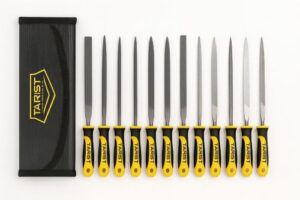
✔️ TARIST 12-Piece Needle File Set
(With Tool Bag)
Great for shaping small inlay pieces and cleaning up tight recess edges.
This set gives you multiple file profiles for fine detail work, smooth control, and clean fits without removing too much material.
Why It’s Great:
✓ 12 file shapes — perfect for tiny inlay details
✓ Smooth cut — lets you tune fits without over-cutting
✓ Great for recess cleanup — helps inlays sit flush
✓ Comfort handles — easy to grip during detail work
✓ Tool bag included — keeps everything organized
✓ Excellent value — tons of capability for the price
🎨 Expert Insights: Tips and Inspiration from a Master
Sometimes the best way to level up your skills is to learn from someone who’s been living and breathing the craft for decades. In the world of wood inlay, one name stands above the rest — Larry Robinson.
Larry Robinson is a legendary inlay artist known for his incredibly detailed designs, from guitars and mandolins to custom furniture and fine art pieces. He’s been a huge influence on the woodworking world for a long time — and he was a big influence on me, too.
His books are the reason I even dipped my toes into the inlay world. I’ve had quick chats with him before, and he’s exactly the kind of guy you hope your heroes would be;
down-to-earth,
laid back,
and generous with his knowledge…
total hippie vibes in the best possible way.
If you want to dive deeper into the art of inlay, his books are packed with step-by-step techniques, inspiration, and years of wisdom.
They’re not just guides — they’re roadmaps to unlocking your creativity.
👉👉 You can get his books right here: The Art of Inlay by: Larry Robinson

🎯 Pro Tips for Perfecting Your Craft
Learning from woodworkers who’ve spent years mastering inlay can save you time, frustration, and wasted material. Here are some of the most valuable lessons seasoned inlay artists pass along:
Keep your tools razor sharp
It sounds simple, but a sharp chisel or blade makes all the difference.
Dull tools tear fibers and leave ragged edges.
Sharp edges glide cleanly, giving you tighter inlay joints and smoother cuts.
👉 Helpful resource: A beginner’s sharpening stone kit is an affordable way to keep your chisels and knives performing at their best.
Break complex designs into sections
Big patterns can look intimidating.
Break the project into smaller chunks — outline first, then tackle each section one at a time.
It reduces mistakes and makes even intricate designs a lot more manageable.
Use pencil marks for micro-adjustments
When test-fitting inlay pieces, light pencil marks help guide tiny corrections.
The best part? They sand away easily without leaving a trace.
Little habits like this help keep your workflow clean and frustration-free.
Work in a bright, clean space
Good lighting is essential.
Bright, even light helps you spot tiny flaws before they grow into big problems.
Pair that with a tidy bench and you’ll improve your accuracy, focus, and final results.
Keep learning from the masters
Workshops, books, and videos from professionals are goldmines.
Every project teaches you something,
but learning from experts helps you avoid common mistakes and level up faster.
Wood inlay is a craft of patience and persistence.
With every project you take on, you’ll sharpen your skills, build confidence, and unlock new creative possibilities.
Celebrate your progress at every stage — and never stop experimenting.
Final Thoughts
Wood inlay is one of those crafts that blends patience, creativity, and precision into something truly special. Whether you’re experimenting with simple geometric patterns or tackling more detailed intarsia designs, each project helps sharpen your skills and deepen your appreciation for fine woodworking.
Even small inlay accents can transform an ordinary piece of wood into something custom, personal, and meaningful.
The great thing about inlay work is that it grows with you.
You don’t need a fancy workshop or specialized tools to get started —
just patience, focus, and a willingness to slow down and enjoy the process.
As you build confidence, your designs become bolder, your cuts get cleaner,
and your creativity opens new doors.
Stick with it, take your time, and let every project remind you why working with your hands feels so rewarding.
If you’re looking to push your inlay journey even further, I’ve put together some helpful guides that dive deeper into related topics:
For Guitar Enthusiasts:
-
Customizing Your Electric Guitar Kit With Unique Fretboard Inlays – A step-by-step look at how inlays can transform your guitar build.
-
How To Create Custom Inlays For Your Guitar Fretboard – Practical methods to design and set your own custom fretboard inlays.
-
Essential Tools Every Electric Guitar Kit Builder Should Have – A closer look at the must-have tools that make inlay (and other guitar projects) easier and more precise.
 More Woodworking Projects You’ll Enjoy
Here are a few other beginner-friendly project ideas you can try next:
-
How to Build a Wooden Mailbox – A sturdy outdoor project that teaches accurate layout and assembly.
-
Build a Simple Wooden Toolbox – A classic beginner project and a great way to organize your tools.
-
DIY Display Case – Learn clean joinery with a project that looks great in any room.
-
Craft a Kids’ Stool in 5 Steps – A quick build that teaches essential cutting and measuring skills.
These projects help you grow your skills while creating something you’ll enjoy for years to come.
You got this!
 Craft it. Shape it. Own it!
 Need More Plans?
 Click here to learn more about Ted’s Woodworking Plans.
If you want access to hundreds of additional woodworking projects and detailed tutorials, check out my full review of Ted’s Woodworking Plans.
It’s packed with step-by-step builds that are perfect for weekend projects.

 Turn Your Woodworking Passion Into Income
Click here to learn more about Wealthy Affiliate.
SawdustSmarty.com started as a small hobby —
and it only grew once I finally learned how to build a real website.
If you’ve ever thought about turning woodworking into a side income, the training at Wealthy Affiliate is what I personally recommend.
