Choosing the right wood isn’t just about durability —
it’s about how your jewelry box looks and feels when it’s finished.
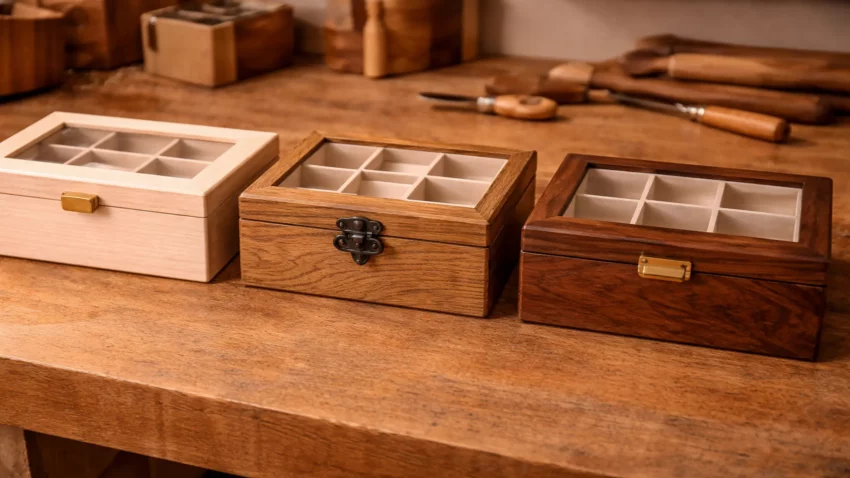
The same design built with different wood can look completely different.
That’s why matching wood type to style matters more than most beginners realize.
👉 Why Wood and Design Must Match
- Wood color affects overall tone
- Grain pattern impacts visual detail
- Texture influences perceived quality
👉 The wrong combination can make a good build look average.
🪵 Light Woods = Clean, Modern Style
Examples: Maple, Poplar
Works Best For:
- Minimalist designs
- Modern jewelry boxes
- Clean, simple layouts
👉 Creates a bright, smooth, refined look
🪵 Dark Woods = Rich, Classic Style
Examples: Walnut
Works Best For:
- Elegant or gift-style boxes
- Traditional designs
- High-end appearance
👉 Adds depth and premium feel instantly
🪵 Medium-Tone Woods = Balanced Look
Examples: Oak
Works Best For:
- Rustic styles
- Everyday functional boxes
- Natural wood finishes
👉 A good middle ground for most builds
🎯 Matching Style to Purpose
Ask yourself:
- Is this a gift or practice build?
- Do I want modern, rustic, or classic?
- Will I paint, stain, or keep natural?
👉 The answers guide your wood choice naturally.
⚠️ Common Mistakes
- Using busy grain on small boxes (looks cluttered)
- Mixing styles (modern design + rustic wood)
- Ignoring finish when choosing wood
👉 Simplicity usually looks better.
💡 Pro Tips
- Let the wood do the work—don’t over-design
- Use simple shapes with high-quality wood
- Test finish on scrap to see final look
Want To Compare All Wood Types?
Check out:
👉 Best Wood For Jewelry Boxes (Durability + Appearance Guide)
Final Thoughts…
A great jewelry box isn’t just built well —
it’s designed well.
Matching your wood choice to your style is what takes your
project from basic to something that really stands out.
Keep building — each project gets better.
Come on man… You got this!
 Craft it. Shape it. Own it!