
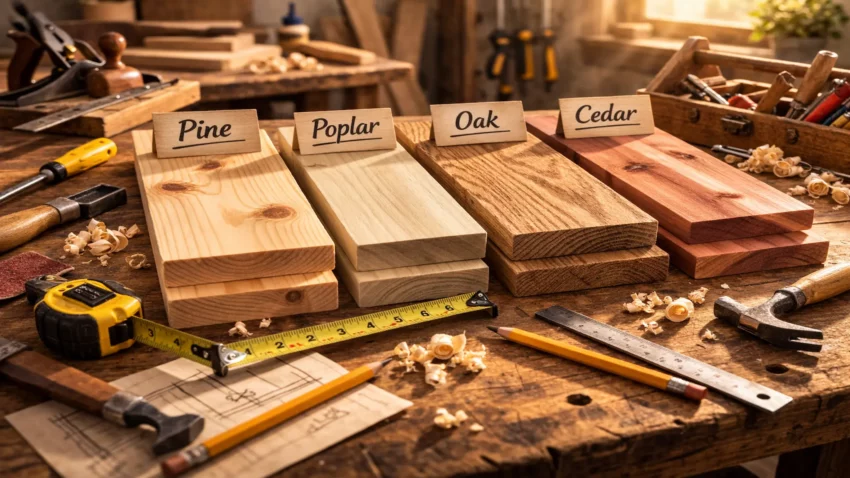
Choosing the right wood is one of the most important decisions a beginner woodworker can make.
The type of wood you use affects how easily it cuts, sands, and finishes —
and it can make the difference between a frustrating project and an enjoyable one.
Some woods are soft and forgiving,
making them perfect for beginners learning basic woodworking skills.
Others are harder, more expensive, and better suited for experienced builders.
In this guide, we’ll look at the best wood types for beginner woodworking projects
and explain when to use each one.
Why Wood Choice Matters For Beginners
Not all wood behaves the same when you cut, drill, or sand it.
Some woods are soft and easy to work with,
while others are dense and can quickly dull tools or split if you’re not careful.
For beginners,
it’s usually best to start with woods that are:
• easy to cut and shape
• inexpensive and widely available
• forgiving if small mistakes happen
Using beginner-friendly wood helps new woodworkers focus on learning the craft
instead of fighting the material.
👉 The table below compares some of the most common wood types
used in beginner woodworking projects. 👈
Wood Comparison Chart
| Wood Type | Difficulty Level | Cost | Best For | Notes |
|---|---|---|---|---|
| Pine | Very Easy | Low | Beginner projects, toys, shelves | Soft, easy to cut and sand but can absorb stain unevenly |
| Poplar | Easy | Low–Medium | Painted projects, boxes, furniture | Smooth grain and easy to finish |
| Cedar | Easy | Medium | Outdoor projects, garden décor, whirligigs | Naturally resistant to moisture and insects |
| Plywood | Easy | Low–Medium | Shelves, boxes, workshop builds | Stable panels, but edges may need covering |
| Oak | Moderate | Medium–High | Furniture, durable projects | Strong and attractive grain but harder to cut |
👉Pine is often used for beginner projects like a
scrap wood phone stand or a simple wooden toy car.
Pine: The Most Beginner-Friendly Wood
Pine is one of the most common woods used in beginner woodworking projects.
It’s inexpensive, widely available at most hardware stores,
and soft enough to cut easily with basic tools.
Because pine is lightweight and forgiving,
it’s ideal for small projects like:
• wooden toy cars
• scrap wood phone stands
• simple shelves
• small gift projects
Pine does have a noticeable grain pattern,
which can sometimes absorb stain unevenly,
but with proper sanding and finishing it can still produce great results.
Poplar: A Great Step Up From Pine
Poplar is another excellent wood choice for beginners.
It’s slightly harder than pine but still easy to cut and sand.
Many woodworkers like poplar because it has a smoother grain pattern,
which makes it easier to paint or finish.
Poplar works well for projects like:
• wooden jewelry boxes
• picture frames
• desk organizers
• small furniture pieces
Because of its smooth texture and stability,
poplar is often considered one of the best woods for beginner woodworking projects.
Cedar: Easy To Work And Naturally Resistant
Cedar is a softwood that is easy to work with
and naturally resistant to moisture and insects.
It’s commonly used for outdoor woodworking projects
because it holds up well in the elements.
Cedar is a great option for projects like:
• outdoor planters
• decorative yard pieces
• wooden whirligigs
• small outdoor furniture
It also has a pleasant natural scent
and attractive color that many woodworkers enjoy.
Plywood: A Practical Choice For Many Projects
Plywood is made by layering thin sheets of wood together,
which makes it stable and resistant to warping.
It’s commonly used in woodworking projects that
require larger panels or flat surfaces.
Plywood works well for:
• shelves
• storage boxes
• cabinets
• workshop projects
While plywood edges may need trimming or edge banding for a clean look,
it’s still one of the most practical materials for many beginner builds.
Woods Beginners Should Avoid
Some woods are much harder and more expensive,
making them less ideal for beginner projects.
Examples include:
• maple
• hickory
• exotic hardwoods
These woods can be difficult to cut with basic tools
and often cost significantly more than beginner-friendly options like pine or poplar.
Once you gain experience and upgrade your tools,
you may enjoy working with these hardwoods —
but they’re usually not the best place to start.
Choosing The Right Wood For Your First Project
When selecting wood for a beginner woodworking project,
focus on materials that are easy to work with and readily available.
Many beginners start with pine because it’s affordable and forgiving,
while poplar offers a smoother surface for painted projects.
As you gain experience,
you’ll naturally experiment with different wood types and
discover which materials work best for your style of woodworking.
Final Thoughts…
The best wood for beginner woodworking projects is usually
wood that is easy to work with, affordable, and forgiving when mistakes happen.
Pine, poplar, cedar, and plywood are all excellent choices that allow beginners to
build projects while developing essential woodworking skills.
By starting with the right materials,
new woodworkers can focus on learning the craft
and building projects that they’ll be proud of.
More Woodworking Projects You’ll Enjoy
Here are a few other beginner-friendly project ideas you can try next:
-
How to Build a Wooden Mailbox –
A sturdy outdoor project that teaches accurate layout and assembly. -
Build a Simple Wooden Toolbox –
A classic beginner project and a great way to organize your tools. -
DIY Display Case –
Learn clean joinery with a project that looks great in any room. -
Craft a Kids’ Stool in 5 Steps –
A quick build that teaches essential cutting and measuring skills.
These projects help you grow your skills
while creating something you’ll enjoy for years to come.
You got this!
 Craft it. Shape it. Own it!